

When to Hit, Stand, Double, or Split in Blackjack
Making the right call at the blackjack table isn’t about guesswork; it all comes down to understanding basic strategy. This is a mathematically proven set of rules that tells you the best move for every possible hand. For example, you should hit on 16 if the dealer is showing a 7 through Ace, but you should stand if they’re showing a 2 through 6. For any hand that adds up to 17 or more, you should always stand, no matter what the dealer’s card is. Based on our 10+ years of operational experience, we’ve seen that players who stick to basic strategy can slash the house edge to a tiny 0.5%. What’s the house edge? It’s the casino’s built-in mathematical advantage. A 0.5% edge means that, over the long haul, the casino only expects to keep about 50 cents for every RM100 you bet. That’s incredibly low, especially when you compare it to the 2-4% house edge that players face when they just go with their gut.
Table of Contents
In every hand of blackjack, you’ve got four main options: hit, stand, double down, or split (if you have a pair). The best choice always depends on your hand’s value and the dealer’s visible card. Understanding these decisions is what turns blackjack from a game of pure luck into a game of skill, where smart players consistently do better than those who rely on instinct. Think of it like learning the rules of the road before you start driving—it doesn’t guarantee a smooth ride every time, but it dramatically boosts your chances of getting where you want to go.
Understanding Your Basic Options
Hit or Stand: The Foundation of Blackjack Strategy
The decision of when to hit or stand in blackjack is the absolute cornerstone of every hand you’ll play. Your choice should be rooted in math and probability, not a lucky feeling. The main goal is simple: get closer to 21 than the dealer without going over (or “busting”). Whether you hit or stand is a calculated risk based on what you can see of the dealer’s hand.
When to Hit: Hitting just means you’re asking the dealer for one more card.
- Any hand totaling 11 or less. It’s impossible to bust, so there’s zero risk. You should always try to improve your hand.
- You have 12-16 and the dealer shows a 7, 8, 9, 10, or Ace. In this spot, the dealer has a strong hand, and your 12-16 probably isn’t going to win. You have to take a card to improve, even with the risk of busting.
- Soft hands (a hand with an Ace counted as 11) that total 17 or less. That Ace is your safety net. If you draw a high card, the Ace can just switch to being worth 1, which stops you from busting.
When to Stand: Standing means you’re satisfied with your hand and don’t want any more cards.
- Hard hands totaling 17 or higher. A “hard” hand is one without an Ace, or where the Ace has to count as 1. Hitting on 17 or more is just too risky; the chance of busting is incredibly high.
- You have 12-16 and the dealer shows a 2-6. These are the dealer’s “danger cards.” They have a high chance of busting, so you don’t want to risk busting your own hand. Just let the dealer take the risk.
- A soft 18 against a dealer’s 2, 7, or 8. In these specific situations, your 18 is strong enough to stand on its own.
The most common question we encounter from new players is should you hit on 16 or 17. The answer is crystal clear: always stand on 17, but hit on 16 when the dealer shows a strong upcard (7 through Ace). This isn’t just an opinion; it’s a strategy backed by millions of computer-simulated hands to find the most profitable move in any scenario.
The Critical 16 vs 17 Decision
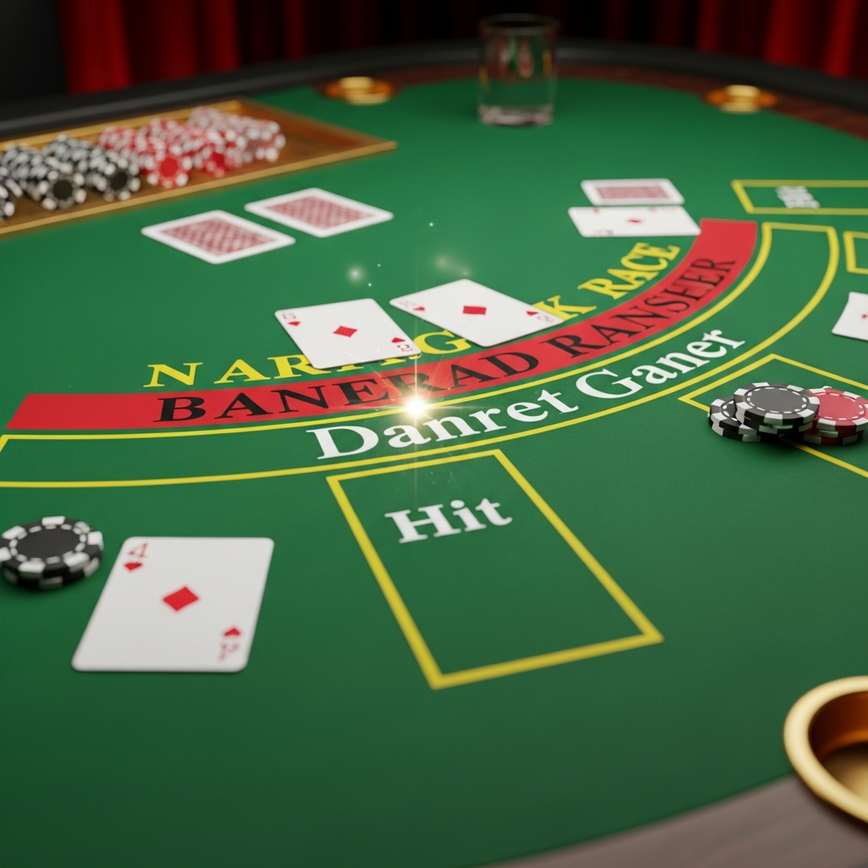
It’s easy to feel stuck with a hand of 16 or 17. Here’s the definitive guide, broken down simply:
Hard 16 Strategy:
- Hit when dealer shows: 7, 8, 9, 10, J, Q, K, A
- Stand when dealer shows: 2, 3, 4, 5, 6
Hard 17 Strategy:
- Always stand, no matter what the dealer’s upcard is.
- Never take another card on a hard 17. A hand of 17 is solid enough to win, and the risk of busting is just too high to justify it.
The logic is purely mathematical. With a 17, you have a decent shot at winning if the dealer busts or ends up with a lower total. But with a 16 against a dealer’s strong card (7-Ace), you’re in a tough position and will likely lose if you stand. Hitting is a risk, sure, but it’s your only real chance to improve your hand and possibly win. It’s all about choosing the play that loses less money over the long run.
Advanced Decisions: Double Down Strategy
Doubling down is an exciting move that lets you double your bet, but you only get exactly one more card. You should use this aggressive play strategically to cash in on favorable hands. Think of it as your power play when the odds are stacked in your favor. So, when to double down blackjack?
When to Double Down
| Your Hand | Dealer Shows | Action |
|---|---|---|
| 11 | Any card | Double |
| 10 | 2-9 | Double |
| 9 | 3-6 | Double |
| Soft 16-17 | 3-6 | Double |
| Soft 13-15 | 5-6 | Double |
Hard 11: This is the best hand to double down on, so you should always do it, regardless of the dealer’s card. Why? Because the deck is packed with 10-value cards (10, J, Q, K), giving you the best possible chance of hitting 21.
Hard 10: Double down when the dealer shows a 2 through 9, but just hit if they have a 10 or Ace. You have a great shot when the dealer looks weak, but it’s too risky to double your bet when they’re showing a strong card themselves.
Hard 9: Only double down when the dealer is showing their weakest cards (3-6). The advantage here is smaller, so you only want to press it when the dealer is most likely to go bust.
Soft Hands: Doubling on soft hands is a great move because the Ace protects you from busting. A “soft” hand is one with an Ace that can be either 1 or 11. For instance, if you double on a soft 16 (Ace-5) and get a 10, your hand just becomes a 16 (Ace=1, 5, 10), not a bust. This flexibility is a huge advantage against a weak dealer card.
Splitting Pairs: Maximizing Your Advantage
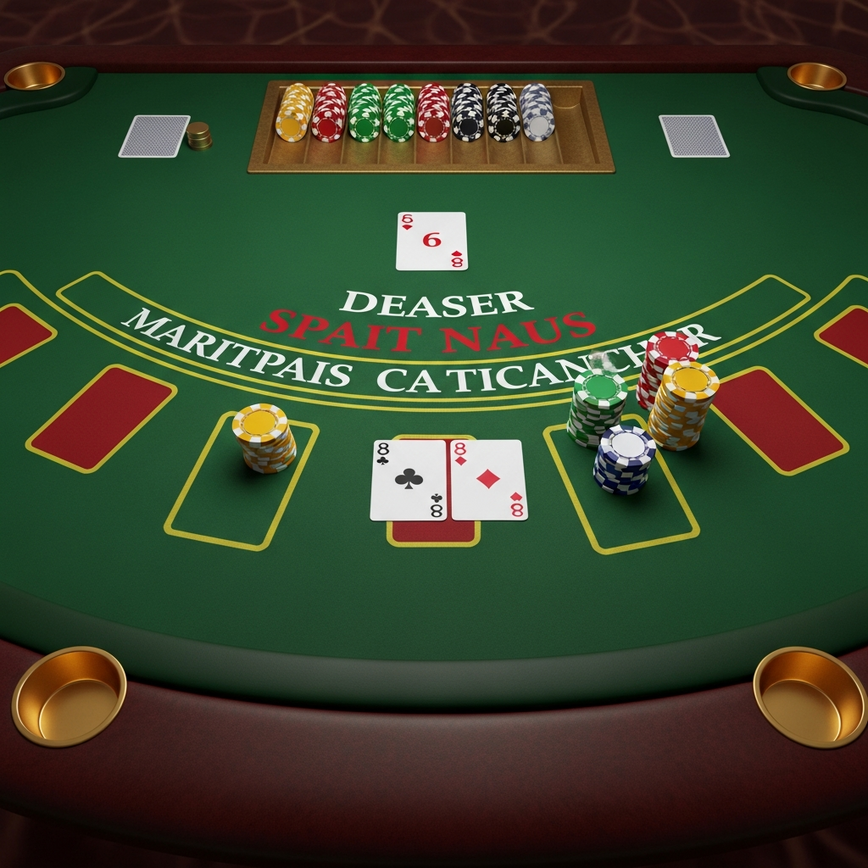
When you’re dealt two cards of the same value (like two 8s or two Kings), you have the option to split them into two separate hands. This requires a second bet equal to your first one. The whole point of when to split blackjack hands is to turn one weak hand into two potentially strong ones or to capitalize on a weak dealer upcard.
Essential Splitting Strategy
| Pair | Dealer Shows | Action |
|---|---|---|
| Aces | Any card | Always Split |
| 8s | Any card | Always Split |
| 10s, J, Q, K | Any card | Never Split |
| 9s | 2-9 (except 7) | Split |
| 7s | 2-7 | Split |
| 6s | 2-6 | Split |
| 5s | Any card | Never Split |
| 4s | 5-6 | Split |
| 2s, 3s | 2-7 | Split |
Always Split Aces and 8s: This is the golden rule of splitting pairs. A pair of Aces is a soft 2 or 12—a pretty weak start. Splitting them gives you two chances to hit a 10 for two separate blackjacks. A pair of 8s adds up to 16, which is the worst possible hand in blackjack. By splitting them, you break up that awful hand and get two new hands starting with 8, which have much better potential.
Never Split 10s or 5s: A pair of 10s gives you 20, a fantastic hand that’s very likely to win. Why on earth would you break up a winning hand? A pair of 5s gives you a total of 10, which is the perfect hand to double down on, not split into two weak hands starting with 5.
Conditional Splits: For most other pairs, your decision depends on the dealer’s upcard. The general rule is to split when the dealer looks weak (showing a 2-6) and your new hands have a good chance of beating whatever the dealer ends up with.
Common Blackjack Scenarios and Solutions
Scenario 1: You Have 12, Dealer Shows 3
Decision: Stand
Reasoning: This one feels wrong to a lot of new players because 12 is a weak hand. But the dealer’s 3 puts them in a dangerous spot. They have to hit, and any 8, 9, or 10 will make them bust. By standing, you’re letting the dealer take all the risk. If you hit your 12, there’s a high chance you’ll bust yourself (any 10-value card will do it).
Scenario 2: You Have Ace-6 (Soft 17), Dealer Shows 4
Decision: Double down
Reasoning: This is the perfect opportunity. The dealer’s 4 is a weak card, meaning they’re likely to bust. Your soft 17 is a flexible hand that can’t bust on the next card. Doubling your bet here is the best way to maximize your profit when the odds are so heavily in your favor.
Scenario 3: You Have 9-9, Dealer Shows 7
Decision: Stand
Reasoning: Your hand total is 18, which is a strong hand. While the dealer’s 7 is respectable, your 18 is likely to beat any hand they make that isn’t 19, 20, or 21. Splitting your 9s would create two hands starting with 9, which are weaker starting points against a dealer’s 7. It’s much better to stick with the strong 18 you already have.
Basic Strategy Chart for Quick Reference
To use this blackjack decision chart, find your hand total in the first column on the left. Then, find the dealer’s visible upcard in the top row. The cell where they meet tells you the mathematically correct move to make.
Hard Hands (No Ace or Ace Counted as 1)
| Your Hand | Dealer: 2-6 | Dealer: 7-A |
|---|---|---|
| 8 or less | Hit | Hit |
| 9 | Double vs 3-6, Hit vs 2,7-A | Hit |
| 10 | Double vs 2-9, Hit vs 10-A | Hit |
| 11 | Double | Double |
| 12 | Stand | Hit |
| 13-16 | Stand | Hit |
| 17+ | Stand | Stand |
Soft Hands (Ace Counted as 11)
| Your Hand | Dealer: 2-6 | Dealer: 7-A |
|---|---|---|
| A,2 – A,5 | Double vs 4-6, Hit others | Hit |
| A,6 – A,7 | Double vs 3-6, Hit others | Hit |
| A,8 – A,9 | Stand | Stand |
Putting Strategy into Practice
Understanding basic strategy is just the first step. Applying it consistently takes practice and discipline. We recommend starting out on low-stakes games to build your confidence before moving up to higher limits. Don’t get discouraged if you make a few mistakes at first—memorizing the chart takes a little time.
At our live casino tables, you’ll find professional dealers who keep the game moving at a comfortable pace, giving you time to think through your decisions without feeling rushed. Our platform follows UK Gambling Commission casino game regulations and eCOGRA fair gaming certification standards. The house-edge figures we’ve cited are supported by mathematical probability analysis of blackjack basic strategy; you can see a representative analysis at The Mathematics of Blackjack for the methodology and results.
Managing Your Bankroll with Basic Strategy
Smart bankroll management goes hand-in-hand with basic strategy. Even when you play perfectly, blackjack has short-term swings (streaks of wins and losses). It’s crucial to set clear limits for your sessions and stick to them, whether you’re on a winning or losing streak.
- Recommended Session Bankroll: Aim for 20-40 times your average bet. For example, if you plan to bet RM10 per hand, you should bring between RM200 and RM400 to the table for that session.
- Stop-Loss Limit: A good rule is 50% of your session bankroll. If you started with RM200, you should walk away if your balance hits RM100.
- Win Goal: Set a realistic profit target of 50-100% of your session bankroll and be disciplined enough to cash out when you hit it.
Advanced Considerations
Insurance and Even Money
Basic strategy is very clear on this: never take insurance or even money, no matter what hand you have. Insurance is just a side bet that the dealer has blackjack. It pays 2-to-1, but the actual odds of the dealer having blackjack are worse than that. This means, over time, the insurance bet is a guaranteed loser, carrying a hefty house edge of about 7.4%.
Surrender Rules
If the casino offers a “surrender” option, you can fold your hand and get half your bet back before the dealer checks their cards. This is a good move, but only in the absolute worst situations.
- Surrender a hard 15 against the dealer’s 10
- Surrender a hard 16 against the dealer’s 9, 10, or Ace
Card Counting Considerations
While card counting can give you an edge, it takes a lot of practice and isn’t really possible in most online blackjack games where the deck is shuffled after every single hand. Your main focus should be on mastering basic strategy first, as it provides the biggest mathematical advantage available to players and works in every game.
Common Mistakes to Avoid
- Playing Hunches: Ignore your “gut feelings” and trust the basic strategy. The math doesn’t lie, but feelings often do.
- Chasing Losses: Don’t start betting bigger after losing a few hands to try and win your money back fast. That’s a quick way to empty your bankroll.
- Taking Insurance: Just don’t do it. As we explained, it’s a mathematically bad bet.
- Splitting 10s: Keep your strong 20! A 20 is one of the best hands in blackjack; don’t break it up for a chance at something else.
- Standing on Soft 17: Always hit a soft 17 (or double down if the chart says to). You can’t bust, so there’s no reason not to try and improve your hand.
Conclusion
Mastering when to hit, stand, double, or split in blackjack is what elevates you from a casual player to a strategic one. The decisions we’ve laid out in this guide are mathematically proven to shrink the house edge and boost your winning potential over the long term.
Remember, basic strategy is your foundation, but choosing the right game and managing your bankroll are just as important. Look for tables with player-friendly rules (like the dealer standing on all 17s), manage your money responsibly, and stay disciplined with your decisions, even when you’re on a losing streak.
With a bit of practice and patience, these strategies will become second nature. This will let you relax and enjoy the game, confident that you’re playing with optimal technique. Start putting these ideas into practice, and you’ll see better results and feel more confident at the blackjack table.
Our team consists of licensed gaming professionals with over 10 years of direct industry experience in the Malaysian market. Our insights are based on operational data from thousands of gaming sessions and regulatory compliance with the Malta Gaming Authority; see MGA FAQs for details.




Leave a Reply
Want to join the discussion?Feel free to contribute!