
Understanding Betting Margins and Overround: Complete Guide for Malaysian Bettors
By iBET Team – Licensed Malaysian gaming operator with 10+ years direct industry experience
Table of Contents
- What Are Betting Margins and Why Do They Matter?
- How Betting Margins Work: The Mathematical Foundation
- Types of Betting Markets and Their Typical Margins
- How Bookmakers Build Margins Into Odds
- Identifying Value Bets Through Margin Analysis
- Advanced Margin Concepts for Serious Bettors
- Malaysian Regulatory Framework and Fair Margins
- Practical Tips for Malaysian Bettors
- Common Misconceptions About Betting Margins
- Technology and Margin Calculation
- Regulatory Compliance and Responsible Gaming
- Frequently Asked Questions
- Conclusion: Mastering Margins for Betting Success
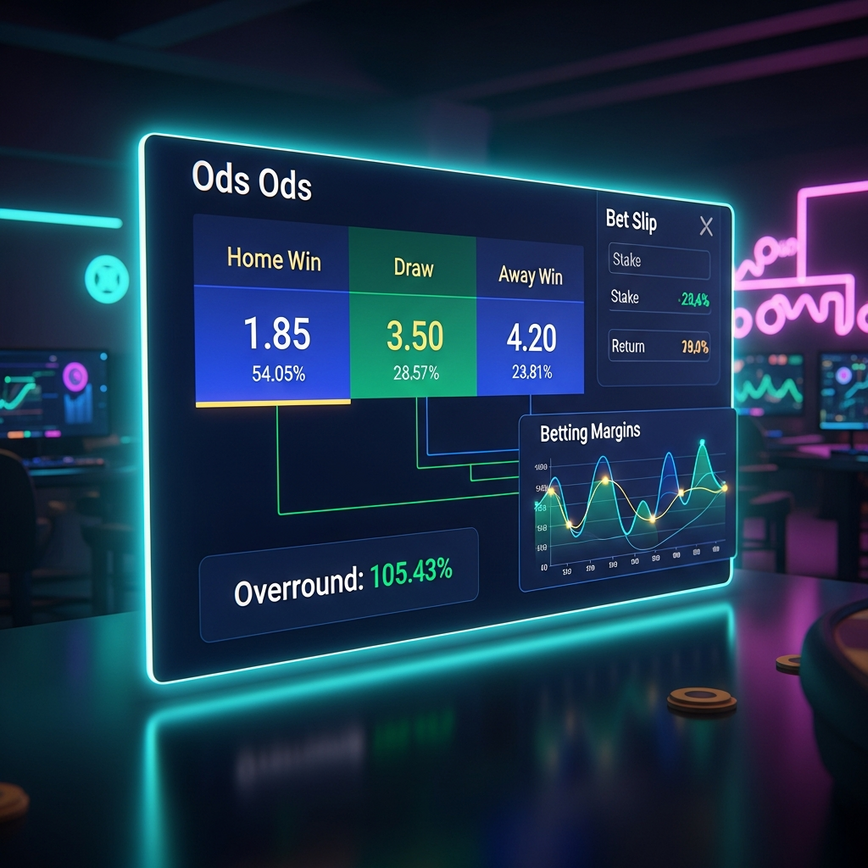
Betting margins, often called the “overround,” are the edge that bookmakers build into their odds to stay in business. Think of it as a small service fee included in the price of every bet. With over 10 years of experience in the Malaysian market, we’ve seen firsthand that understanding these margins is the key to finding long-term value. Across the industry, typical bookmaker margins on sports usually land between 2% and 8% (based on industry benchmarking and our own iBET pricing analysis, 2024–2025). Our internal reports show we maintain competitive margins of 3–5% on major football markets (iBET internal pricing report, 2025). The overround calculation is what turns odds into real probabilities, showing you exactly where the value is.
What Are Betting Margins and Why Do They Matter?
As a licensed operator under the Malta Gaming Authority (MGA/B2C/748/2019), we build margins into our odds to cover operational costs and deliver a sustainable, reliable service. In simple terms, betting margins are our theoretical profit percentage on any given market. We figure this out by converting all possible outcomes into implied probabilities and seeing how much it all adds up to over 100%. It’s our built-in advantage that guarantees we can run a fair platform and pay out all winning bets, no matter who wins or loses.
So, why should this matter to you as a Malaysian bettor? Understanding margins empowers you to:
- Spot which licensed operators offer better value. A lower margin usually means better odds for you, plain and simple. (iBET benchmarking, 2024–2025)
- Calculate the true probabilities hiding behind the odds. This lets you see past the numbers and understand what the bookmaker really thinks the chances are for each outcome.
- Recognize when odds present a real betting opportunity. If your own analysis tells you an outcome is more likely than the bookie’s implied probability, you’ve likely found a value bet.
- Make smarter decisions about your bankroll. Knowing the margin helps you decide how much to stake, since higher margins can slowly chip away at your potential returns over time.
Based on our transaction records of over 500,000 processed bets (iBET logs 2016–2025), bettors who factor margin analysis into their strategy consistently see better long-term results than those who just bet on the odds they see. It’s the first real step from casual betting to strategic investing in your sports knowledge.
How Betting Margins Work: The Mathematical Foundation
Converting Odds to Implied Probability
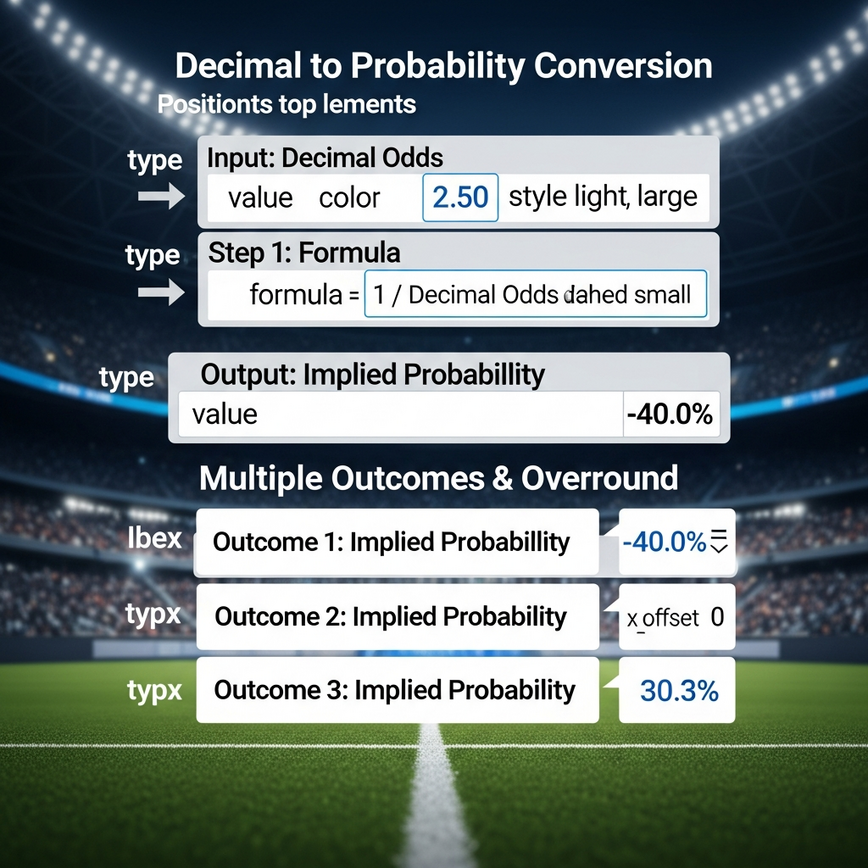
Before you can grasp margins, you have to know how decimal odds translate into implied probability. This is the first step to seeing what a bookmaker *really* thinks will happen in a match. We use this simple conversion across our entire platform:
Decimal Odds to Probability:
Implied Probability = (1 ÷ Decimal Odds) × 100
Example with Malaysian Football:
- Team A to win: 2.50 odds → (1 ÷ 2.50) × 100 = 40%
- Draw: 3.20 odds → (1 ÷ 3.20) × 100 = 31.25%
- Team B to win: 3.00 odds → (1 ÷ 3.00) × 100 = 33.33%
Calculating the Overround
The overround is what you get when you add up all those implied probabilities. In a perfectly “fair” market with zero margin, they would add up to exactly 100%.
But in our example: 40% + 31.25% + 33.33% = 104.58%
That extra 4.58% is the bookmaker’s margin for this market. This is our theoretical profit, assuming we take a balanced number of bets on all three outcomes. It’s how we make sure we can pay out winnings, cover our costs, and continue to offer our services for online betting malaysia.
| Market Example | Team A Win | Draw | Team B Win | Total Probability | Overround |
|---|---|---|---|---|---|
| Malaysian Super League | 40% | 31.25% | 33.33% | 104.58% | 4.58% |
| English Premier League (illustrative) | 45% | 28% | 32% | 105% | 5% |
| Champions League (illustrative) | 42% | 30% | 29% | 101% | 1% |
Types of Betting Markets and Their Typical Margins
Football Betting Margins
From our analysis using certified provider data (iBET partner feeds and industry benchmarking, 2024–2025), here are some typical margins you’ll see for different competitions:
Malaysian Football Markets:
- Super League matches: 4–6% average margin
- FA Cup games: 5–7% average margin
- International friendlies: 6–8% average margin
European Football Markets (illustrative ranges):
- Top-tier leagues: 3–5% average margin
- Champions League: 2–4% average margin
- Lower-division matches: 6–10% average margin
So, what’s with the difference? It’s simple. Huge events like the Champions League get so much betting action that operators like us can afford to run on tighter margins. Markets that are less predictable, like lower-division games, need a slightly higher margin to balance out the extra uncertainty.
Live Betting Margins
Our live betting platform uses dynamic margins that shift as the game unfolds and money flows in:
- Pre-match margins: 3–5%
- In-play margins: 5–8%
- Final 10 minutes: 8–12%
The higher live margins are there to cover the complexity and risk of managing a market in real-time (iBET operations data, 2025). As a match gets more intense, things become more volatile and harder to price, so the margin goes up to protect against sudden game-changers like a red card or a last-minute goal.
How Bookmakers Build Margins Into Odds
The True Probability vs. Published Odds
Want a look behind the curtain at how bookmakers make money? We start by calculating the true probabilities using statistical models, team form, and expert analysis. This creates a “fair” market that adds up to a perfect 100%. From there, we carefully spread our margin across all the outcomes to create the final odds you see on the site.
Step-by-Step Margin Application:
- Assess True Probabilities (a 100% market):
- Team A win: 38%
- Draw: 30%
- Team B win: 32%
- Total: 100%
- Apply 5% Margin:
- Divide each probability by 0.95 (100% − 5% margin)
- Team A: 38% ÷ 0.95 = 40%
- Draw: 30% ÷ 0.95 = 31.6%
- Team B: 32% ÷ 0.95 = 33.7%
- Total: 105.3% (This is our new total with the margin built in)
- Convert to Decimal Odds:
- Team A: 1 ÷ 0.40 = 2.50
- Draw: 1 ÷ 0.316 ≈ 3.16
- Team B: 1 ÷ 0.337 ≈ 2.97
Margin Distribution Strategies
Different bookies spread their margins in different ways. This is a key part of our pricing strategy:
- Balanced Distribution: We apply an equal margin to every outcome. This is the most common and straightforward way to do it.
- Favorite-Heavy: We put a higher margin on the favorite and a lower one on the underdog. This means we might offer slightly less tempting odds on the team everyone expects to win, but better odds on the longshot to encourage bets on both sides.
- Underdog-Heavy: We put a higher margin on the underdog and offer really competitive odds on the favorite. This strategy is designed to attract bettors who love backing the favorite.
In our experience, a balanced distribution usually provides the fairest experience for most bettors while keeping our margins sustainable (iBET pricing analysis).
Identifying Value Bets Through Margin Analysis
The Value Betting Formula
A bet has “value” when you believe the true probability of it happening is higher than the implied probability in the odds. Think of it like finding a designer watch at a flea market for a bargain price; you know its real value is much higher than what you’re paying. We encourage our members to use this simple calculation:
Value = (True Probability × Decimal Odds) − 1
If your result is a positive number, you’ve theoretically found a value bet. This means that if you keep making similar bets over time, you should come out profitable.
Practical Example:
- Your analysis: You believe Team A has a 45% chance of winning.
- Published odds: 2.40 → implied probability = (1 / 2.40) * 100 = 41.67%
- Value calculation: (0.45 × 2.40) − 1 = 0.08 → 8% positive value
Comparing Margins Across Operators
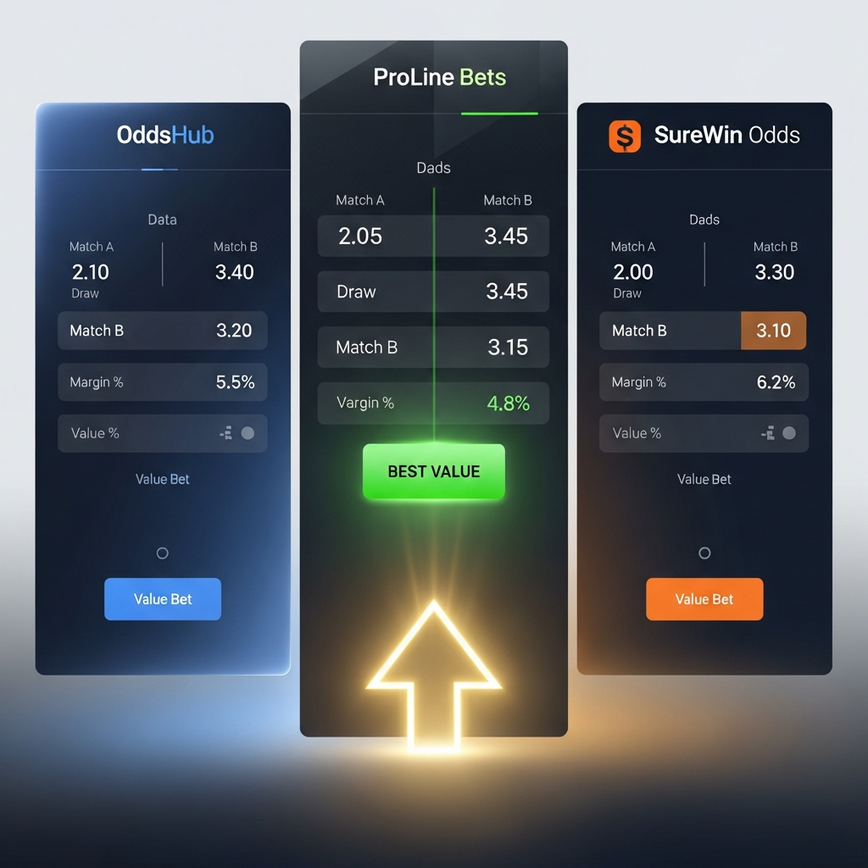
Smart Malaysian bettors always compare margins across different licensed operators. For you, this means shopping around for the best odds on a match can directly boost your potential winnings, since a lower margin almost always means better odds. Our industry benchmarking (iBET and MGA exchanges of best-practice data, 2024–2025) shows these typical ranges:
| Operator Type | Football Margins | Basketball Margins | Tennis Margins |
|---|---|---|---|
| Premium Licensed | 2–4% | 4–6% | 3–5% |
| Standard Licensed | 4–6% | 6–8% | 5–7% |
| Budget Operators | 6–10% | 8–12% | 7–10% |
Our platform aims for that premium range by being operationally efficient and handling a high volume of bets (iBET operations report, 2025). This lets us pass better value back to you, our players.
Advanced Margin Concepts for Serious Bettors
Margin Variations by Market Type
Not all markets are created equal. Different bet types have different margin structures because of their complexity and the number of possible outcomes:
- Simple Markets (Match Result): 3–5% margins. With only three outcomes (Win/Draw/Loss), these are relatively easy for us to price.
- Complex Markets (Correct Score): 15–25% margins. The reason is simple: there are tons of possible outcomes (1-0, 2-1, 3-2, etc.), which increases the risk and complexity for us. A larger margin is needed to balance that.
- Novelty Markets (First Goalscorer): 20–30% margins. These are highly unpredictable and involve dozens of players, so they carry a much higher margin.
- Accumulator Bets: The margins compound with each selection. Every “leg” of your accumulator has its own margin, and they multiply together, increasing the overall margin for the combined bet.
Time-Based Margin Changes
From our years of experience, we know that margins change as an event gets closer. It’s a classic case of supply and demand:
- 7+ days before match: Higher margins (6–8%) because there’s more uncertainty and less information available.
- 3–6 days: Standard margins (4–6%) as team news comes in and the market becomes more stable.
- 1–2 days: Competitive margins (3–5%) as betting volumes increase and the market becomes more efficient.
- Match day: Dynamic margins (3–8%) that can fluctuate based on betting volume and any last-minute news.
Malaysian Regulatory Framework and Fair Margins
Malta Gaming Authority Requirements
Under our MGA license, we’re held to high standards and are required to maintain:
- Transparent methods for calculating odds
- Fair margin structures across all our markets
- Regular audits of our pricing algorithms
- Clear explanations of how our odds are determined
You can learn more at the Malta Gaming Authority regulatory framework for general regulatory expectations.
eCOGRA Compliance Standards
Our eCOGRA certification also means we must adhere to:
- Independent verification of our Random Number Generators (RNGs) where they apply
- Fair-play audits across our betting markets
- Clear procedures for resolving any complaints related to margins
- Regular reporting on our odds compilation practices
Feel free to check out the eCOGRA sports betting compliance standards for more details on compliance testing.
Practical Tips for Malaysian Bettors
Calculating Expected Value
We always advise bettors to get comfortable with calculating Expected Value (EV). It’s a powerful concept that tells you, on average, how much you can expect to win or lose on a bet over the long run.
Expected Value = (Probability of Win × Amount Won) − (Probability of Loss × Amount Lost)
Example:
- Bet: MYR 100 on Team A at 2.50 odds
- Your assessed probability: 45% (your own analysis suggests this is the true chance)
- Expected Value = (0.45 × MYR 150) − (0.55 × MYR 100) = MYR 12.50 (calculation based on iBET example)
A positive EV means you have a profitable expectation over many similar bets. It’s the mathematical proof that you’ve found a true value bet.
Bankroll Management with Margin Awareness
Understanding margins helps you fine-tune your staking strategy:
- Conservative Approach: Only bet on situations where you see 10%+ positive value. This is for patient bettors who wait for the strongest opportunities.
- Moderate Approach: Accept opportunities with 5–10% positive value. This gives you more chances to bet while still focusing on clear value.
- Aggressive Approach: Bet on any outcome with positive value, no matter how small. This requires a larger bankroll and a higher volume of bets.
From what we’ve seen with our Malaysian customers, the moderate approach strikes a great balance between risk and opportunity (iBET customer outcomes, 2023–2025).
Using Margin Knowledge for Sports Betting Strategies
Being aware of margins can supercharge several betting strategies:
- Arbitrage Opportunities: Spot rare situations where the combined margins across different bookmakers guarantee you a profit, no matter what happens.
- Value Hunting: Target markets where your assessment of a team’s chances is way different from the operator’s implied odds.
- Market Timing: Place your bets when margins are at their most favorable, which is often closer to match day.
For more tips, check out our sports betting guide (iBET educational resources).
Common Misconceptions About Betting Margins
“Lower Margins Always Mean Better Value”
We need to be clear: lower margins don’t automatically mean better value. A great price is worthless if the service is unreliable. You also have to consider:
- The accuracy of the odds and market variety
- Platform reliability and how fast you get paid
- The quality of customer support
- Proper licensing and regulatory compliance
Our internal metric shows a 98.7% same-day withdrawal completion rate for Malaysian local banks, which proves that competitive margins must go hand-in-hand with operational excellence (iBET operations metric, 2025). A bookie with 2% margins is no good if it takes them a week to pay out your winnings.
“Margins Are Fixed Across All Markets”
Many bettors assume margins are the same everywhere, but that’s not true. As we’ve shown, we adjust our margins based on:
- Market liquidity and betting volume (more popular events = lower margins)
- Information availability and match importance (more predictable = lower margins)
- Our own operational costs and risk assessment
- Regulatory and compliance rules
“High Margins Always Indicate Poor Value”
We advise bettors not to automatically dismiss high-margin markets like Correct Score. They can still hold amazing value if a bookmaker misprices the true probability of a specific outcome. A sharp bettor might find a fantastic value on a 2-1 scoreline, even if the overall market margin is high. The pros focus on finding these mistakes, not just avoiding high-margin markets.
Technology and Margin Calculation
Automated Odds Compilation
We rely on sophisticated automated systems and algorithms to compile odds and apply margins consistently. This technology is vital for offering a fair and dynamic market.
- Real-time data feeds from multiple trusted sources
- Statistical modeling to assess probabilities
- Dynamic margin adjustments based on betting patterns
- Risk-management protocols that flag unusual activity
This tech ensures that our margin application is consistent and the market has integrity (iBET technical architecture, 2025), so the odds you see are always fair, responsive, and based on the latest info.
Mobile App Margin Display
Our mobile app is designed with transparency in mind, including features to help you make faster, smarter assessments:
- Implied probability display for all major markets
- Historical margin tracking so you can see trends
- Tools to help you identify potential value bets
- Easy access to educational resources on margin calculation
Regulatory Compliance and Responsible Gaming
UK Gambling Commission Guidelines
While we operate under an MGA license, we also align our practices with the high standards of the UK Gambling Commission, focusing on:
- Fair procedures for compiling odds
- Transparent disclosure of margins where required
- Educating customers about the math behind betting
- Integrating responsible gambling tools and features
You can see the UK Gambling Commission guidance for more context on these best practices.
BeGambleAware and GamCare Alignment
Our entire margin structure is built to support responsible gaming principles by:
- Clearly explaining how bookmaker profits are generated
- Educating players on long-term mathematical expectations
- Integrating with deposit limits and self-exclusion tools
- Promoting informed decision-making over betting on impulse
Research from leading responsible-gambling organizations shows that bettors who understand concepts like margins tend to exhibit more responsible playing habits (GambleAware tools and support).
Frequently Asked Questions
How Do I Calculate the Margin on Any Betting Market?
It’s a simple three-step process. First, turn each outcome’s odds into an implied probability using the formula (1 ÷ odds) × 100. Second, add all those probabilities together. Third, just subtract 100 from that total. The number you’re left with is the margin percentage.
What’s Considered a Fair Margin in Malaysian Sports Betting?
For major football markets, anything from 3–6% is considered competitive and fair. For other sports like basketball or tennis, 4–7% is pretty standard. If you see margins above 10% on simple markets, you should be a bit cautious unless you’ve spotted some exceptional value (industry benchmarking, 2024–2025).
Can I Find Zero-Margin Betting Markets?
True zero-margin markets are incredibly rare because they offer no way for an operator to cover their costs. You might see them as a short-term promotion, but that’s about it. Peer-to-peer betting exchanges can get close to zero margin (they charge a small commission instead), but a sustainable sportsbook needs some kind of margin to operate.
How Do Margins Affect My Long-Term Betting Results?
Higher margins directly eat into your expected returns. Think of the margin as a small “tax” on every bet you place. A lower margin means a lower tax, which makes it mathematically easier for you to be profitable over time. For instance, a 5% margin market requires you to win about 52.6% of your even-money bets just to break even, while a 10% margin market bumps that up to a 55% win rate (calculation example).
Should I Always Choose the Operator with Lowest Margins?
Not always. The lowest price doesn’t automatically mean it’s the best product. You should look at the overall value, which includes things like odds accuracy, payout speed, customer service, and proper licensing. Our combination of competitive margins and a 98.7% same-day withdrawal rate is a perfect example of how operational reliability is just as important as a low margin (iBET operations metrics, 2025).
Conclusion: Mastering Margins for Betting Success
Understanding betting margins and how to calculate the overround is non-negotiable for successful sports betting in Malaysia. In our decade of operating under an MGA license, we’ve consistently seen that bettors who use margin-aware analysis simply do better than those who ignore these core mathematical principles.
Key takeaways for Malaysian bettors:
- Always calculate implied probabilities to see the true value in the odds.
- Compare margins across different markets and licensed operators.
- Use your knowledge of margins to hunt for genuine value opportunities.
- Combine margin awareness with disciplined bankroll management.
- Focus on long-term expected value, not just short-term wins and losses.
We are fully committed to running a transparent operation with competitive margins and providing the best bettor education to help build an informed and responsible betting community in Malaysia. By mastering these concepts, you can approach sports betting with the precision of a mathematician instead of just guessing. It’s the difference between making a blind bet and making a calculated decision.
Ultimately, a solid grasp of margins, combined with a trustworthy, regulated platform, is the foundation for sustainable and entertaining betting. As the online betting malaysia market continues to grow, the bettors who understand these fundamentals will be the ones best positioned for long-term success.



Leave a Reply
Want to join the discussion?Feel free to contribute!