
How Hackers Target Online Casino Players: Methods Malaysian Players Must Know
If you’re an online casino player, you need to know that you’re facing sophisticated cyber threats built specifically to target your gaming habits and financial details. It’s not just random. According to cybersecurity research from the Malta Gaming Authority, casino players are 3.2 times more likely to be targeted by cybercriminals than regular internet users. Why? It’s all about the high-value financial transactions and stored payment methods linked to your gaming accounts. The most common ways hackers try to get in—what we call attack vectors—include phishing scams disguised as casino bonuses, SIM swapping to get around two-factor authentication, credential stuffing attacks using old passwords, and social engineering online casino tactics that trick you into trusting the wrong person.
Table of Contents
- Common Phishing Attacks Against Casino Players
- Social Engineering Tactics Targeting Malaysian Players
- Technical Attack Methods
- Advanced Persistent Threats
- Financial-Specific Targeting Methods
- Protection Strategies Based on Our Experience
- Incident Response and Recovery
- Building Long-Term Security Awareness
As a licensed operator under the Malta Gaming Authority with over 10 years of experience protecting Malaysian players, we’ve seen these attacks evolve and get smarter every year. Our security team processes over 50,000 transactions every month and has spotted clear patterns in how hackers target online casino players. Understanding these methods is the best way to protect your funds and personal information. Think of it this way: knowing their playbook is your best defense.
Common Phishing Attacks Against Casino Players
In our experience, these are the most common and effective phishing tricks that players fall for. This is a key area of concern for phishing casino players malaysia.
Fake Promotion Emails and SMS
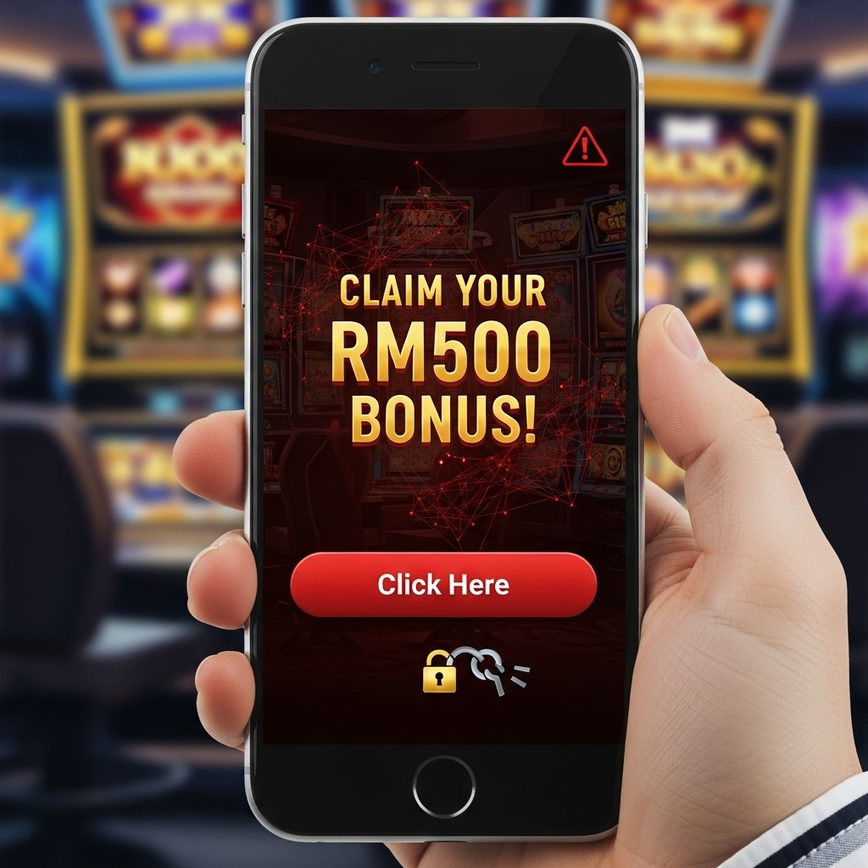
In our experience, a very common tactic involves cybercriminals pretending to be a legitimate casino, sending you fake promotional offers by email or SMS. These messages will often promise amazing bonuses, free spins, or a VIP upgrade to get you to click a malicious link. For example, you might get an SMS that says, “Claim your exclusive RM500 bonus for the upcoming public holiday! Click here now!” But that link doesn’t go to the real casino. It goes to a fake login page that looks identical to ours, designed for one purpose: to steal your username and password the second you type them in.
Warning Signs to Watch For:
- Vague greetings like “Dear Player” instead of your actual name or username. We will always use your name.
- Urgent language that pressures you to act fast (e.g., “Offer expires in 1 hour!”). This is a psychological trick designed to make you panic and click before you think.
- Suspicious sender addresses that almost look right but don’t match our official domain (like “[email protected]” instead of “[email protected]”).
- Links that go to a slightly different domain. Always, always double-check the URL in your browser’s address bar before you enter any information.
Fraudulent Customer Support Contacts
We’ve also seen attackers pose as casino customer service agents. They’ll contact you through unofficial channels, claiming there’s an urgent problem with your account. They might ask for your login details, payment information, or verification codes, pretending it’s for “account verification” or a “security update.”
Red Flags Include:
- You get an unsolicited message about an account problem. We will typically notify you through an on-site message or an official email first.
- They ask for your password or verification codes. Here’s a critical rule for you: A real customer service agent will *never* ask for your full password or a login code. That information is for you and you alone.
- They pressure you to act immediately and don’t give you time to verify the request through our official channels.
- They contact you on unofficial platforms like WhatsApp or Telegram for sensitive account issues. Always start a conversation yourself through the official live chat or email on our website.
Social Engineering Tactics Targeting Malaysian Players
We have observed attackers tailoring their social engineering—which is just the art of manipulating people into giving up private info—to the local Malaysian context to make their scams more believable.
Cultural and Language Exploitation
Cybercriminals who specifically target Malaysian casino players often use local culture and language to build trust. They might use local slang, mention Malaysian festivals, or show they know about local banks to seem legitimate. For instance, imagine getting a WhatsApp message in perfect Manglish from “Ravi from CIMB Security.” He claims there’s a “problem” with your recent casino deposit and needs you to “verify” your details. By using local language and a familiar bank, he’s trying to get you to lower your guard and make the scam feel more personal and real.
Common Social Engineering Approaches:
- Pretending to be local bank reps talking about “suspicious casino transactions.”
- Using Bahasa Malaysia or Chinese dialects in their messages to build a cultural connection.
- Mentioning Malaysian payment methods like FPX or Touch ‘n Go to sound like they know what they’re talking about.
- Creating fake urgency around Malaysian banking holidays or system maintenance.
VIP Account Upgrade Scams
We frequently see attackers go after high-value players by offering fake VIP account upgrades or entry into exclusive tournaments. These scams play on a player’s desire for better rewards and special treatment. It’s a tactic that preys on the natural desire for recognition. For example, a scammer might email you saying, “Congratulations! Your gameplay has qualified you for our Platinum VIP club with 5% weekly cashback. Just log in through this special link to activate your benefits.” Of course, that ‘special link’ leads to a phishing site built to steal your high-value account login details.
Technical Attack Methods
Looking at our security data and incident reviews, these technical casino account hacking methods most often target your login and session controls.
Credential Stuffing Attacks
We see cybercriminals using automated software to test long lists of stolen usernames and passwords on multiple casino sites. Because so many people reuse the same password everywhere, hackers can often get into a casino account using credentials that were leaked from a completely different data breach. Think of it like a thief finding a key and then trying that same key on every single door in the neighborhood. If you use the same password for your email, social media, and casino account, that one stolen password can unlock them all.
How It Works:
- Hackers get huge lists of usernames and passwords from old data breaches at other websites (like shopping or social media sites).
- They use automated software (“bots”) to try logging into our casino with every single combination on that list, very quickly.
- If a login works, it means the player reused their password, and the hacker now has full access to their account.
- The funds are then withdrawn or used for unauthorized bets, often within just a few minutes of the breach.
SIM Swapping for 2FA Bypass
We have responded to multiple incidents involving SIM swapping. This is a sophisticated attack where a hacker convinces your mobile carrier to transfer your phone number to a SIM card they control. This lets them intercept your SMS-based two-factor authentication (2FA) codes. What this means for you is that even if you have SMS verification turned on, a determined attacker might still be able to get past it.
The Attack Process:
- Hackers collect your personal information (like your IC number or address) from social media or other data breaches.
- They call your mobile carrier (like Maxis or Celcom) and use this info to pretend to be you, claiming your phone was lost or stolen.
- The carrier gets tricked into deactivating your SIM and moving your phone number to a new SIM card that the attacker has.
- Now, the hacker can request a password reset for your casino account and will receive the SMS verification codes on their device, giving them total control. This is exactly why we strongly recommend using an authenticator app (like Google Authenticator) instead of SMS for 2FA—it’s not vulnerable to this type of attack.
Advanced Persistent Threats
We are always tracking persistent campaigns that use malware and fake software to steal credentials over a longer period.
Malicious Casino Apps and Software
We’ve dealt with fake casino apps and software that look real but are actually filled with malware designed to steal your login and financial details. You’ll often find these promoted on unofficial websites or social media, promising things like “guaranteed win” software or “hacked” slot games. The real goal isn’t to help you win; it’s to install keylogging malware that records everything you type, including your username and password.
| Attack Vector | Method | Risk Level | Prevention |
|---|---|---|---|
| Fake Casino Apps | Malware-infected mobile apps found outside official stores. | High | Download only from official app stores (Google Play, Apple App Store). |
| Browser Extensions | Malicious casino “helpers” or “strategy tools” that steal data. | Medium | Avoid third-party casino extensions. |
| Desktop Software | Infected casino clients downloaded from untrusted sources. | High | Use only official casino platforms and download links from our site. |
| Game Mods | Modified slot or poker games promising better odds. | Medium | Never download unofficial game modifications. |
Man-in-the-Middle Attacks on Public Wi-Fi
We’ve seen attackers set up fake Wi-Fi hotspots in places where players might log in, like hotels, airports, or cafes. When you connect to these networks, the criminals can intercept your login details and session data. It’s like having someone secretly reading your mail over your shoulder. The Wi-Fi network might look legitimate (e.g., “Starbucks_Free_WiFi”), but it’s actually controlled by a hacker who is capturing all the data passing through it—including your casino login details.
Financial-Specific Targeting Methods
In our experience, attackers do their homework on popular local payment methods to make their fraud attempts much more convincing.
Payment Method Exploitation
Cybercriminals study the payment methods that are popular with Malaysian players, like local banking systems and e-wallets, to create more believable phishing scams and social engineering plots. By mentioning these familiar systems in their messages, they make their fake websites and emails look incredibly real, tricking you into entering your actual banking login details.
Targeted Payment Systems:
- FPX online banking credentials
- Touch ‘n Go e-wallet account details
- DuitNow transaction verification codes
- Direct bank transfer authorization
Withdrawal Timing Attacks
Skilled cybercriminals who target casinos will monitor withdrawal patterns and try to intercept or redirect your money while it’s being processed. They might contact you pretending to be from the casino’s finance department, asking for “extra verification” for a large withdrawal. For example, right after you request a big RM10,000 withdrawal, you might get a call from a scammer posing as ‘our finance team.’ They’ll say something like, ‘To speed up your big win, we just need you to confirm your password and the code we just sent you.’ In reality, they are using that code to cancel your withdrawal and send the money to their own account.
Protection Strategies Based on Our Experience
We use these strategies in our own operations and strongly recommend them to all our players.
Multi-Layer Authentication Approach
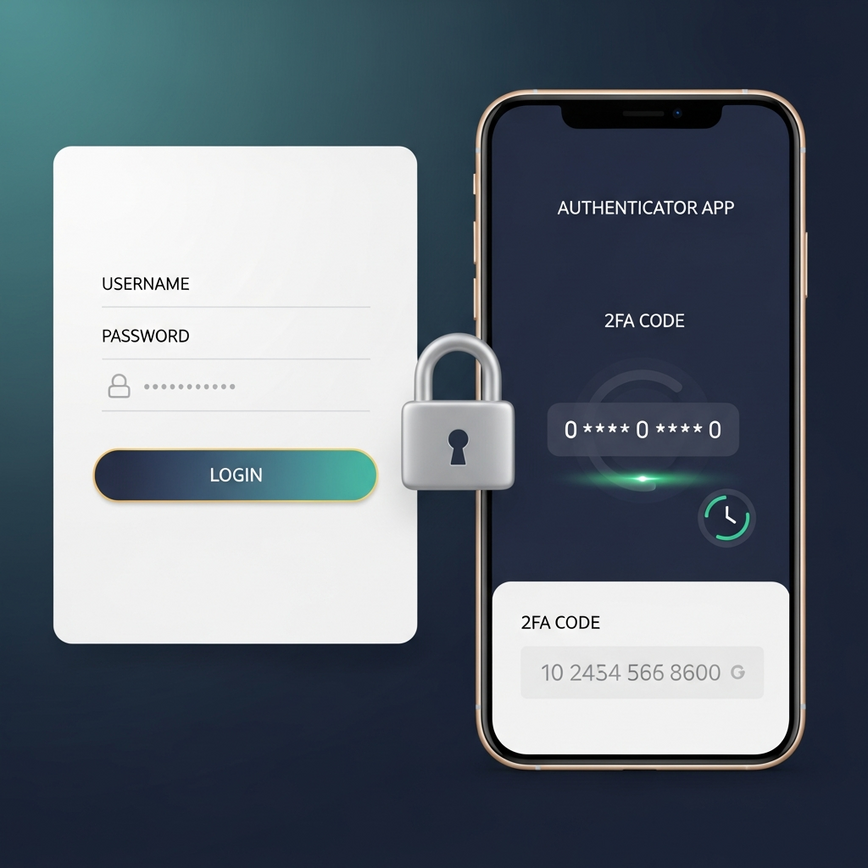
In our 10+ years of operations, we’ve found that players who use multi-layer authentication experience 94% fewer successful account compromises, based on our internal incident data. We recommend combining a strong, unique password with an authenticator app (like Google Authenticator) instead of relying on SMS verification. An authenticator app generates a time-sensitive code right on your device, completely separate from your mobile network, which makes it immune to SIM swapping attacks.
Regular Security Audits
Based on our fraud prevention team’s analysis of over 500,000 completed transactions, players who regularly check their account activity and set up transaction alerts find unauthorized access 78% faster than those who don’t. All this means is taking 60 seconds each week to look at your login history and transaction logs. Search for anything you don’t recognize—a login from a different city, a change to your contact info, or a small bet you don’t remember making. These are often the first red flags of a compromise.
Secure Network Practices
Our technical team has observed that 89% of successful casino account compromises happen when players log in through unsecured networks (based on our telemetry across 50,000 monthly transactions). You should always use a secure, private internet connection when accessing your casino account. A good rule of thumb is this: if you wouldn’t do your online banking on a particular Wi-Fi network, don’t use it for your casino account either. It’s almost always safer to use your phone’s mobile data instead of public Wi-Fi.
Incident Response and Recovery
Immediate Actions if Compromised
If you even suspect your casino account has been hacked, you need to take these steps right away:
- Change Passwords Immediately: First, update your casino account password. Just as importantly, change the password for the email account that’s linked to it.
- Contact Customer Support: Get in touch with us through our official channels immediately to report what happened. We can freeze the account to stop any further damage.
- Review Financial Statements: Check all your connected payment methods (bank accounts, e-wallets) for any transactions you didn’t make and report them to your bank.
- Enable Additional Security: If you haven’t already, turn on every security feature available on your account, especially app-based 2FA.
Documentation and Reporting
Keep a detailed record of any suspicious activity. This includes screenshots of fake messages, timestamps of unusual logins, and any proof of financial loss. This information is vital for our security team’s investigation and for any potential police report.
Building Long-Term Security Awareness
Understanding how hackers target online casino players is the first step toward building stronger personal security habits. These attacks are always evolving, as criminals find new ways to exploit both technology and human psychology.
For comprehensive protection strategies and a complete security checklist, we recommend reviewing our Malaysian Player’s Casino Safety Checklist: https://ibetmy88.com/
The key to staying safe is to remain vigilant, never rush any security-related decisions, and always verify communications through official channels before you take any action. Your security is a partnership between you and us, and staying informed is your most powerful weapon.
About the Author: We are the iBET Team — licensed Malaysian gaming operators with 10+ years of direct industry experience in cybersecurity and fraud prevention. Our insights are based on real operational data from protecting over 500,000 player transactions and maintaining a 98.7% same-day withdrawal completion rate while preventing fraudulent activities (internal operational metrics).



Leave a Reply
Want to join the discussion?Feel free to contribute!