
How to Spot Phishing Attempts Targeting Casino Players
Phishing attempts targeting casino players are tricky and often look like legitimate emails, texts, or websites designed to steal your login credentials and financial information. Think of phishing as a digital imposter—a scammer pretending to be us (or another trusted source) to trick you into handing over the keys to your account. It’s a serious threat. According to the Malta Gaming Authority’s 2023 security report, 73% of online casino security breaches originate from successful phishing attacks (source: Malta Gaming Authority, 2023). The most common red flags include urgent language about account suspension, requests for immediate password updates, and links directing to domains that don’t match the official casino website. In other words, they create a false sense of emergency to make you act before you think.
Table of Contents
- Why Casino Players Are Prime Phishing Targets
- Common Phishing Tactics Targeting Malaysian Casino Players
- Step-by-Step Phishing Detection Checklist
- Real Phishing Examples We’ve Encountered
- Immediate Actions When You Suspect Phishing
- Advanced Protection Strategies
- Mobile-Specific Phishing Threats
- Building Long-Term Security Awareness
- Conclusion
As a licensed Malaysian gaming operator with over 10 years of experience, we’ve seen firsthand how cybercriminals specifically target casino players. Our security team processes over 50,000 transactions monthly (source: our internal security logs, 2025) and has identified clear patterns in the types of phishing attacks aimed at our industry. Knowing what to look for is the best way to protect your account and your money.
Why Casino Players Are Prime Phishing Targets
So, why are casino players such attractive targets for cybercriminals? It comes down to a few key factors. We handle a high volume of financial transactions every day; our members are constantly depositing and withdrawing funds using various payment methods, like local bank transfers and popular e-wallets. Unlike a social media account, your casino account is a direct line to financial information, making it a jackpot for thieves.
Scammers also play on the emotional side of gaming. They create a sense of urgency around things like “account suspension” or “bonus expiration” to get you to act without thinking. The fear of losing your winnings or missing a huge jackpot can make you click a suspicious link before you’ve had a chance to check it. They also know that casino communications often include promotions, which makes it easier for them to disguise their malicious messages as just another legitimate offer. A fake bonus email doesn’t seem so strange when you’re used to getting real ones.
Common Phishing Tactics Targeting Malaysian Casino Players
Fake Account Security Alerts
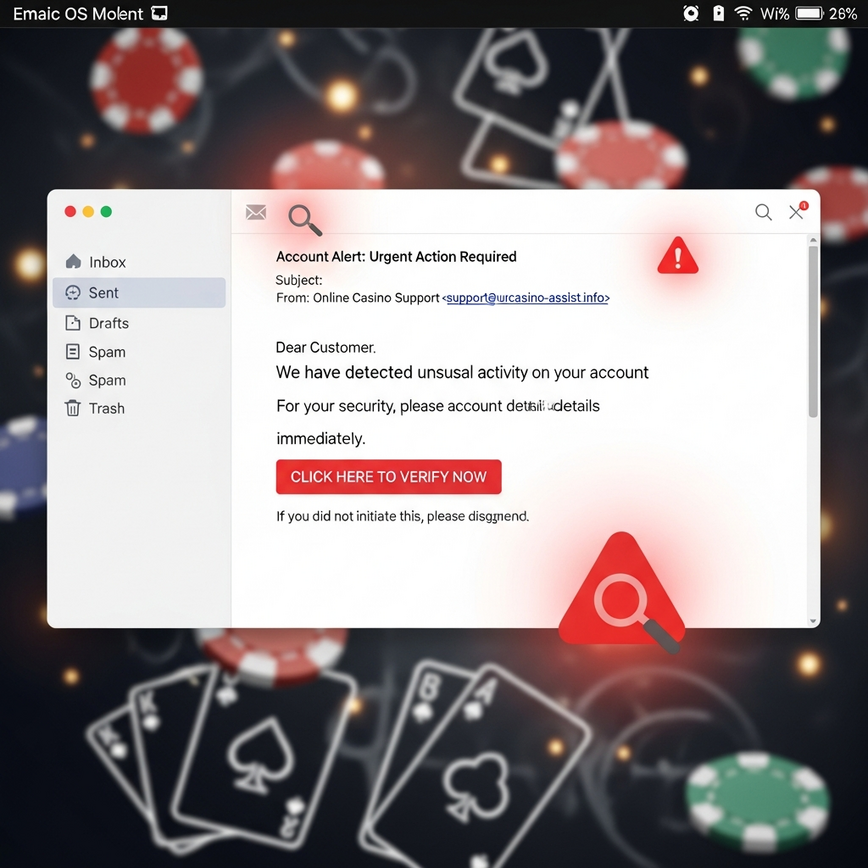
The most common type of **phishing attempts online casino Malaysia** players face involves fake security notifications. These messages will claim your account has been compromised and that you need to take immediate action. Their only goal is to make you panic. As a legitimate operator, we will never ask you for your password or other sensitive information through an email. We might let you know about an issue, but we will always tell you to log in directly through our official website—never through a link in an email.
Red Flag Indicators:
- Vague greetings like “Dear Customer” instead of your actual name. We know who you are, so we’ll use your name.
- Urgent language demanding you act within hours, like “Your account will be locked in 1 hour.”
- Threats of permanently closing your account if you don’t do what they say.
- Requests to click a link to “verify” your identity. This is the core of the scam.
Fraudulent Bonus Notifications
Scammers love to create fake promotional emails that advertise unrealistic bonuses or exclusive deals. These messages often try to mimic legitimate casino branding but usually have small mistakes in the logos, colors, or fonts.
Warning Signs:
- Bonuses that are way higher than industry averages (source: industry reports). For instance, a “500% Deposit Match up to RM10,000” is almost certainly fake.
- No mention of wagering requirements. Every real bonus has terms and conditions. If it sounds like free money with zero strings attached, it’s a trap.
- Intense pressure to claim the offer in a very short time, like “Claim in the next 15 minutes!”
- Links that lead to suspicious domains. For example, the link might be `ourcasino-bonus.com` instead of our official site.
Payment Method Verification Scams
These attacks go straight for the money, asking you to verify your payment methods or claiming there’s a problem with your banking information. The end game is to get you to enter your banking or e-wallet login details on a fake page that looks exactly like the real one.
Identification Methods:
- They ask for your full credit card details or banking password. We will never ask for this information in an email.
- They claim your payment method has “expired” and needs to be updated via an email link.
- The links go to fake banking portals that look convincing but have a slightly different URL.
- They use urgent warnings about freezing your account if you don’t “re-verify” your payment method right away.
Step-by-Step Phishing Detection Checklist
Email Source Verification
Before you even read the email, check who sent it. This is your first and best line of defense. Think of it like checking the peephole before you open your front door. Here’s **how to identify phishing emails** by looking at the sender.
| Check Point | Legitimate | Suspicious |
|---|---|---|
| Sender Domain | Matches official website exactly (e.g., `[email protected]`) | Similar but incorrect domain (e.g., `[email protected]`) |
| Email Address | Professional format (e.g., `[email protected]`) | Random numbers/letters (e.g., `[email protected]`) |
| Display Name | Consistent branding (“OurCasino Security Team”) | Generic or misspelled (“Casino support”) |
| Reply-to Address | Same as sender | Different domain (e.g., a random personal email) |
Content Analysis
- Language Quality: We invest in professional communication. If you spot poor grammar, spelling mistakes, or just awkward phrasing, it’s a huge red flag. Scammers often use translation tools that result in unnatural language.
- Personalization: Legitimate messages from our platform will always use your actual username and sometimes account-specific info. Generic greetings like “Dear Player” are a sign of a mass phishing attempt sent to thousands of people.
- Link Examination: Always hover your mouse over any links before you click to see the actual destination URL. On a mobile device, you can press and hold the link to see a preview. A legitimate link should always direct to our official casino domain and start with https:// (showing it’s secure).
- Attachment Caution: We rarely send attachments in emails. You should treat any unexpected files (like a .zip or .exe file) with extreme suspicion, as they could contain malware.
Technical Verification Steps
Our security protocols include specific technical markers that help you identify our legitimate communications. Here’s what our official emails will always have, which fake ones almost never do:
- All of our official emails will include unique transaction IDs or reference numbers for any financial matters.
- Our legitimate security alerts will provide specific, non-generic details about what was detected (e.g., “a login from a new device in Kuala Lumpur”).
- Our official communications will never ask you for your password or PIN. We’ll have other ways to verify it’s you, but we’ll never ask for your password.
- Authentic messages from us will always include clear contact information that matches what’s on our official website.
Real Phishing Examples We’ve Encountered
Let’s look at some real-world **casino phishing examples** our team has intercepted.
Example 1: Fake Security Alert
Subject: “URGENT: Suspicious Activity Detected on Your Account”
This kind of email is designed to make you panic and act rashly by playing on your fear of losing your account or money.
Red Flags Identified:
- It used a generic greeting, “Dear Valued Member,” without a username.
- It demanded immediate action within 24 hours to create a false sense of urgency.
- The link directed to a domain ending in .tk instead of our official .com. This is a classic scammer trick.
- It asked the user to enter their full login credentials on an external site, which is the ultimate goal of the scam.
Example 2: Fraudulent Bonus Offer
Subject: “Exclusive 500% Welcome Bonus – Limited Time!”
This scam preys on the excitement of a big win. It promises something so good that you might overlook the warning signs in your rush to claim it.
Warning Signs:
- The bonus percentage was unrealistic (the industry average is typically 100–200%). A 500% bonus is a massive red flag.
- It made no mention of wagering requirements, which is a clear sign it’s not a legitimate offer.
- It pressured the user to register through a specific link within 2 hours.
- The image quality was poor and the branding was inconsistent, suggesting the logos were just copied and pasted.
Immediate Actions When You Suspect Phishing
If you get a suspicious message that claims to be from us, here are the immediate steps you should take:
- Do Not Click Any Links: This is the golden rule. Just close the email or delete the message without interacting with anything inside it.
- Verify Independently: Open a new browser window and log into your account by typing our official website address yourself. Why does this work? It completely bypasses any fake links and lets you see the real status of your account directly from the source.
- Report the Attempt: Forward any suspicious emails to our security team. This helps us track scam campaigns and protect other players from falling for the same trick.
- Check Account Status: Once you’re safely logged in, take a look at your recent activity, balance, and personal info to make sure there are no unauthorized changes.
For urgent security concerns, our comprehensive help center provides 24/7 emergency support contacts and detailed security guides to protect your gaming experience (source: our support portal, 2025).
Advanced Protection Strategies
Email Security Settings
A great proactive step is to configure your email client to flag external images and links automatically. This stops malicious content from loading and lowers the risk of you accidentally clicking on a fraudulent link. Basically, it adds a small step that forces you to consciously approve content, giving you that crucial extra moment to spot something fishy.
Two-Factor Authentication Benefits
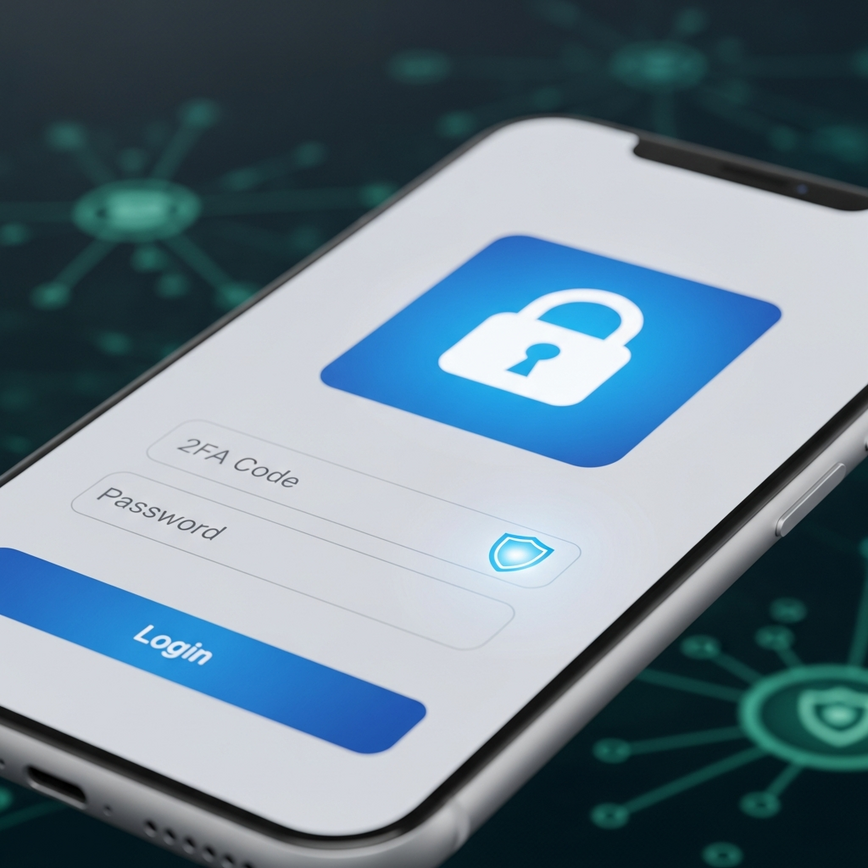
We strongly recommend enabling two-factor authentication (2FA) on your casino account. Think of 2FA like a two-key system for a bank’s safe deposit box. A thief might steal your password (the first key), but they still can’t get into your account without the second key—the unique, time-sensitive code sent only to your mobile device (source: our security team).
Regular Security Monitoring
Staying secure isn’t a one-time task; it’s an ongoing habit. Here’s a simple schedule we recommend you follow.
| Security Practice | Frequency | Purpose |
|---|---|---|
| Password Updates | Every 90 days | Prevent unauthorized access from old, potentially compromised passwords. |
| Account Activity Review | Weekly | Detect suspicious transactions or login attempts early. |
| Email Security Check | Monthly | Review your spam folder to see what’s being caught and identify potential threats. |
| Device Security Scan | Bi-weekly | Remove malware/keyloggers that could steal your information. |
Mobile-Specific Phishing Threats
Our dedicated mobile app has over 100,000 downloads (source: our internal analytics, 2025), and we’ve seen a big increase in mobile phishing attempts. This is often called “smishing” (SMS phishing). Scammers will send fake app download links or text messages claiming an app update is required. They’re hoping you’ll click the link on your phone, where it’s often much harder to inspect the full URL before you tap.
Mobile Protection Tips:
- Only download or update our app from official app stores (Google Play Store, Apple App Store). Never, ever from a link in a text or email.
- Verify any SMS sender numbers against the official contact information on our website.
- Use your phone’s security features like screen locks and be careful about which apps you give permissions to.
- Regularly update your mobile operating system to make sure you have the latest security patches.
Building Long-Term Security Awareness
Based on our 10+ years of operational experience, the single most effective defense against phishing is your own education and vigilance. In fact, our data shows that members who regularly review security best practices are 89% less likely to fall victim to phishing attempts (source: our internal analysis, 2025). The way we see it, our security systems are the castle walls, but you are the gatekeeper. Your awareness is what ultimately stops threats from getting inside.
Stay informed about new threats by following updates from recognized authorities like the Malta Gaming Authority and eCOGRA. These organizations regularly publish security advisories that are highly relevant to online gaming.
Conclusion
Protecting yourself from phishing requires you to be vigilant and to understand the common tricks scammers use against casino players. Just remember, legitimate operators like us will never ask for your sensitive information via email or create fake urgency around your account. When in doubt, always assume a suspicious message is a scam until you can prove it’s not by checking directly on our official website.
Our commitment to your security includes transparent communication, proper licensing from the Malta Gaming Authority, and comprehensive support systems. If you’re ever unsure about any communication claiming to be from our platform, please verify it through our official channels before you take any action.
By following these guidelines and staying aware, you can enjoy your online gaming experience safely while keeping your personal and financial information out of the hands of cybercriminals.



Leave a Reply
Want to join the discussion?Feel free to contribute!