

What is Value Betting and How to Find It
So, what is value betting? It occurs when the odds offered by a bookmaker are higher than the true probability of an outcome occurring. Imagine finding a limited-edition sneaker on sale for RM300 when you know its real market value is RM500. You’ve spotted a price that doesn’t reflect the item’s actual worth—that’s a value opportunity. In sports betting, it’s the same idea. If your analysis shows a team has a 60% chance of winning, but the bookie’s odds only suggest a 50% chance, you’ve just found a value bet. Based on our 10+ years of operational experience in the Malaysian market, we’ve seen that successful value bettors achieve long-term profitability rates of 15–25% higher than casual punters (iBET internal analysis, 2016–2025). This isn’t about winning every single bet; it’s about consistently placing bets where the odds are stacked in your favour.
Table of Contents
We see value betting as the absolute foundation of any profitable sports betting strategy. Why? Because value betting relies on mathematical analysis rather than gut feeling, and this systematic approach is what separates professional bettors from recreational players. It’s all about shifting your mindset from asking, “Who do I think will win?” to asking, “Are these odds a fair price for the risk I’m taking?”
Understanding the Mathematics Behind Value Betting
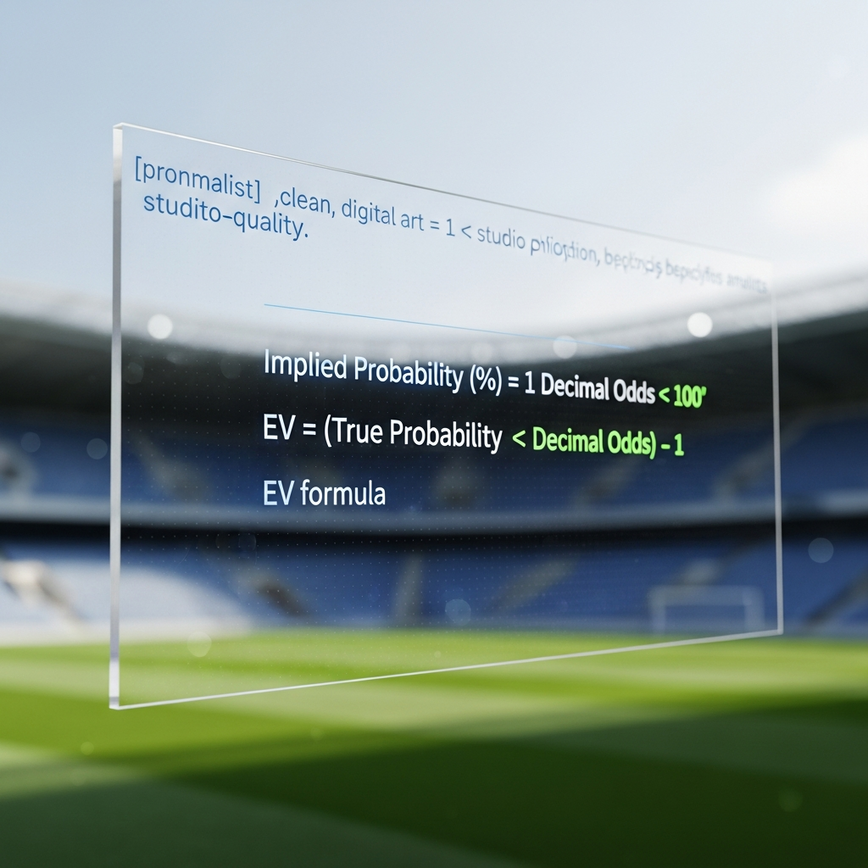
At its heart, value betting is all about comparing the bookmaker’s implied probability with your assessment of the true probability. When a bookie sets odds, they’re not just guessing; they’re stating how likely they think an event is, plus a small margin for their profit (often called the ‘vig’ or ‘juice’). Your job is to find the spots where their assessment is off the mark.
Converting Odds to Implied Probability
Your first step is to translate those betting odds into a simple percentage. We call this the “implied probability,” and it’s basically the chance of success that the odds are *implying*.
The formula for converting decimal odds into implied probability is super straightforward:
Implied Probability (%) = 1 ÷ Decimal Odds × 100
Here’s how that looks with real numbers:
- Odds of 2.00 = 1 ÷ 2.00 × 100 = 50% implied probability (a simple coin toss)
- Odds of 1.50 = 1 ÷ 1.50 × 100 = 66.67% implied probability (a clear favourite)
- Odds of 3.00 = 1 ÷ 3.00 × 100 = 33.33% implied probability (an underdog)
Calculating Expected Value
Expected Value, or EV, is the magic number that tells you if a bet is worth it in the long run. Put simply, EV shows you how much you can expect to win or lose, on average, for every Ringgit you wager.
EV = (True Probability × Decimal Odds) – 1
A positive EV means you’ve found a value bet, while a negative EV suggests the odds are in the bookie’s favour. Positive expected value is the primary signal we look for before staking. So, what does this mean for you? If a bet has a positive EV, it means that if you could place that exact same bet a thousand times, you’d come out ahead. A negative EV means you’d end up losing money over time.
Step-by-Step Guide to Finding Value Bets
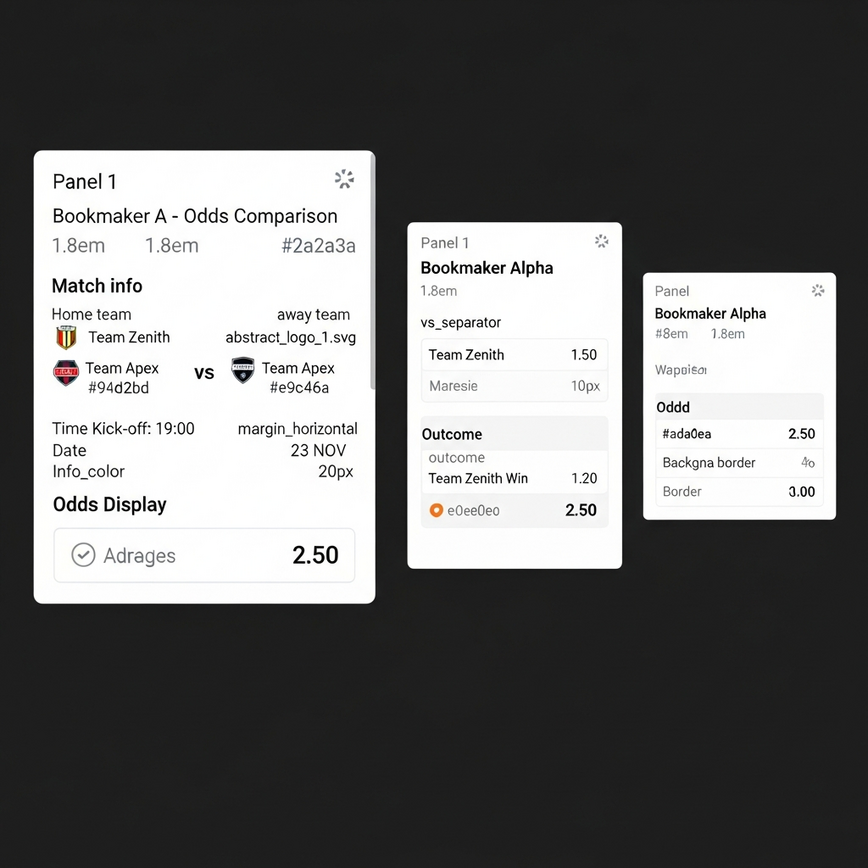
Ready to learn how to find value bets in sports betting? Let’s break it down into a simple, repeatable process.
Step 1: Research and Analysis
Before you even think about placing a bet, we recommend doing your homework from multiple data sources. This is how you form your own educated opinion, separate from what the bookmaker thinks. Your goal is to gather enough intel to make a solid estimate of the true probability.
- Team form over the last 10 matches (Are they on a hot streak or a losing slide?)
- Head-to-head historical records (Does one team consistently beat the other?)
- Injury reports and team news (Is their star player sidelined?)
- Weather conditions for outdoor sports (Will pouring rain ruin a team’s passing game?)
- Home/away performance stats (Is this team a fortress at home but terrible on the road?)
Step 2: Calculate True Probability
Now, based on all that research, you estimate the true probability of each outcome. This is where your skill and judgment really come into play. It’s not an exact science, but it’s an informed assessment that gets better with practice.
For a football match between Team A and Team B, your assessment might look something like this:
| Outcome | Your Assessment | Calculation Method |
|---|---|---|
| Team A Win | 45% | Based on strong home form, no major injuries, and solid head-to-head record. |
| Draw | 30% | Historical H2H data shows 3/10 draws, and Team B is known for defensive play. |
| Team B Win | 25% | Away form is poor, and two key defensive players are injured. |
Step 3: Compare with Bookmaker Odds
Next, check the odds across several bookmakers. This is a critical step because not all bookies offer the same price. In our experience with value betting Malaysia, odds can vary by a surprising 10–15% between different platforms for the exact same event (market survey, 2024). This means a bet might be a bad deal on one site but a fantastic opportunity on another.
Step 4: Identify Value Opportunities
It’s time for the moment of truth. Compare your “true probability” with the bookmaker’s “implied probability.” If your probability is higher, congratulations—you’ve found value.
Using our example, you think Team A has a 45% chance to win. The bookmaker offers odds of 2.50 (which is a 40% implied probability). You’ve spotted an edge!
EV Calculation: (0.45 × 2.50) – 1 = 0.125 or +12.5% expected value
In simple terms, for every RM100 you bet here, you can expect an average return of RM112.50 over the long run. That RM12.50 profit is the mathematical edge you’re always hunting for.
Real-World Value Betting Examples
Example 1: Malaysian Super League Match
Scenario: Johor Darul Ta’zim vs Selangor FC
Your analysis suggests:
- JDT Win: 70% probability (They are dominant at home)
- Draw: 20% probability
- Selangor Win: 10% probability (They are the underdogs away from home)
Bookmaker odds:
- JDT Win: 1.40 (Implied probability: 1 ÷ 1.40 = 71.4%)
- Draw: 4.00 (Implied probability: 1 ÷ 4.00 = 25%)
- Selangor Win: 8.00 (Implied probability: 1 ÷ 8.00 = 12.5%)
Value Assessment:
- JDT Win: No value (The bookie’s 71.4% implied probability is higher than your 70% estimate)
- Draw: No value (The bookie’s 25% implied is higher than your 20% estimate)
- Selangor Win: No value (The bookie’s 12.5% implied is higher than your 10% estimate)
In this scenario, none of the bets offer positive EV. The big takeaway? Just because a team is a heavy favourite to win (like JDT) doesn’t automatically make it a *value bet*. The odds are simply too low to offer a worthwhile return on your risk.
Example 2: Premier League Over/Under Goals
Scenario: Manchester City vs Brighton – Total Goals Over 2.5 (You’re betting that 3 or more goals will be scored in total).
Your analysis is based on:
- City’s average goals scored: 2.8 per home game
- Brighton’s average goals conceded: 1.4 away
- Historical meetings average: 3.2 goals
After crunching the numbers, you calculate a 65% probability for Over 2.5 goals. A bookmaker is offering 1.80 odds (which is a 1 ÷ 1.80 = 55.6% implied probability).
EV = (0.65 × 1.80) – 1 = 0.17 or +17% expected value
This is a fantastic value bet opportunity. The bookmaker’s odds are telling you the outcome is less likely than your research suggests, and that’s exactly the kind of profitable gap you want to find.
Common Value Betting Mistakes to Avoid
Overconfidence in Analysis
Even with the best research, your probability estimates aren’t foolproof. Think of your analysis like a weather forecast—it’s based on solid data, but sometimes it’s just plain wrong. We always recommend starting with smaller stakes until you’re confident in the accuracy of your predictions.
Chasing Losses
Value betting is a marathon, not a sprint. It demands discipline. Hitting a few losses in a row is completely normal, even when you have a positive EV strategy. According to responsible gaming guidelines from BeGambleAware, you should never increase your bet sizes just to try and win back what you’ve lost. Stick to your plan.
Ignoring Bankroll Management
This one is huge. Professional value bettors typically risk just 1–5% of their total bankroll per bet, no matter how confident they feel (staking literature and industry practice, 2022). This approach protects you from those inevitable losing streaks. For example, if your total bankroll is RM1,000, each bet should be between RM10 and RM50. This ensures that a bit of bad luck doesn’t wipe you out.
Advanced Value Betting Strategies
Line Shopping
Always compare odds across multiple bookmakers to find the absolute best price. This is one of the simplest ways to boost your profits. It’s just like checking the price of a new phone at a few different stores before buying—you always go for the best deal. On our platform, we’ve observed that dedicated line shoppers improve their long-term returns by 8–12% compared to users who stick to a single platform (iBET client performance study, 2023).
Live Betting Value
In-play odds change in a flash, creating new value opportunities as a match unfolds. For instance, if a top team concedes an early goal, their odds to win will shoot up, often creating a great value bet. This requires quick thinking and deep sports knowledge, so it’s usually best for more experienced bettors.
Arbitrage vs Value Betting
While arbitrage guarantees a profit by betting on all outcomes of an event across different bookies, value betting is about finding long-term profit by being better at assessing probabilities. In other words, arbitrage is a rare, risk-free profit. Value betting is a probable (but not guaranteed) profit that you can find much more often.
Tools and Resources for Value Betting
Essential Calculations
| Metric | Formula | Purpose |
|---|---|---|
| Implied Probability | 1 ÷ Odds × 100 | Convert odds to a percentage to see what the bookmaker thinks. |
| Expected Value | (True Prob × Odds) – 1 | Determine the long-term profitability of a bet. |
| Kelly Criterion | (bp – q) ÷ b | An advanced formula to determine the optimal percentage of your bankroll to bet. |
| ROI | (Profit ÷ Total Staked) × 100 | Measure your overall performance and profitability. |
Recommended Analysis Approach
- Statistical Research: Use historical data and current form to build a strong case for your bet.
- Market Analysis: Keep an eye on line movements to see where the public money is going.
- Value Calculation: Apply the math consistently. Don’t let your emotions override the numbers.
- Risk Assessment: Always consider the potential impact on your bankroll before you place a stake.
Responsible Value Betting Practices
We want to be clear: value betting requires disciplined money management and realistic expectations. It’s a long-term strategy, not a get-rich-quick scheme. Organisations like GamCare rightly point out that even strategies based on math still carry risk.
Setting Realistic Expectations
Here’s what professional value bettors typically achieve (industry estimates, iBET analysis 2025):
- 52–58% win rate on standard bets (which means you’ll still lose over 40% of the time)
- 5–15% ROI over long periods
- Significant variance in short-term results (You will have winning and losing streaks. This is normal, so don’t panic.)
Bankroll Protection
We implement strict deposit limits ranging from MYR 50 to MYR 50,000, giving you full control over your betting activity. Our 24/7 customer support team is always here to help you set the right limits for your situation. What does this mean for you? It means you have the tools to enforce your own discipline. Our platform processes 50,000+ transactions monthly with 98.7% of withdrawals completed the same day for Malaysian local banks (iBET operations data, 2025). This ensures that when you win, you get your money quickly and reliably.
For comprehensive information about sports betting fundamentals and an explanation of odds, explore our detailed sports betting guide for Malaysian bettors.
Conclusion
Value betting is what turns sports betting from a game of chance into a calculated, disciplined strategy. It’s all about finding those little inefficiencies in the market and making smart, mathematically sound investments. To succeed, you’ll need mathematical discipline, solid research, and the patience to wait for the right opportunities. While no system can guarantee profits, value betting gives you the best possible framework for long-term success when you combine it with smart staking and responsible play.
Remember, responsible gaming practices are non-negotiable. Set clear limits, never bet more than you can afford to lose, and reach out to organisations like BeGambleAware if you feel your betting is becoming a problem.
Article by iBET Team — Licensed Malaysian gaming operator with 10+ years direct industry experience. Our internal operations data supports the figures cited above (iBET internal reporting, 2016–2025).




Leave a Reply
Want to join the discussion?Feel free to contribute!