
Bank Transfer vs E-Wallet: Fastest Deposit Methods at Malaysian Casinos
So, what’s the fastest way to fund your account? E-wallets typically process deposits instantly (we see most under 30 seconds), while bank transfers usually take about 5–30 minutes for Malaysian online casino deposits. Simply put, if you want to start playing right away, an e-wallet is almost always your quickest bet. Based on our 10+ years of operational data (2014–2026) covering over 500,000 transactions, e-wallets also have a higher success rate (98.9%) compared to bank transfers (94.2%). That means fewer frustrating failed attempts and less time spent troubleshooting. However, it’s not a one-sided story. Bank transfers offer higher transaction limits and lower fees for larger deposits, so the best method really depends on our players’ deposit size and priorities. What does this mean for you? If you’re a high-volume player, the cost savings from using bank transfers can add up significantly over time. Source: our internal transaction logs and performance analytics (2014–2026).
Table of Contents
- Understanding Payment Speed at Malaysian Online Casinos
- Cost Comparison: Fees and Hidden Charges
- Security Analysis: Protection and Risk Factors
- Success Rates and Common Failure Points
- Recommended Methods for Different Player Types
- Troubleshooting Common Deposit Issues
- Withdrawal Speed Comparison
- Frequently Asked Questions
- Making Your Choice: Speed vs Cost vs Security
Understanding Payment Speed at Malaysian Online Casinos
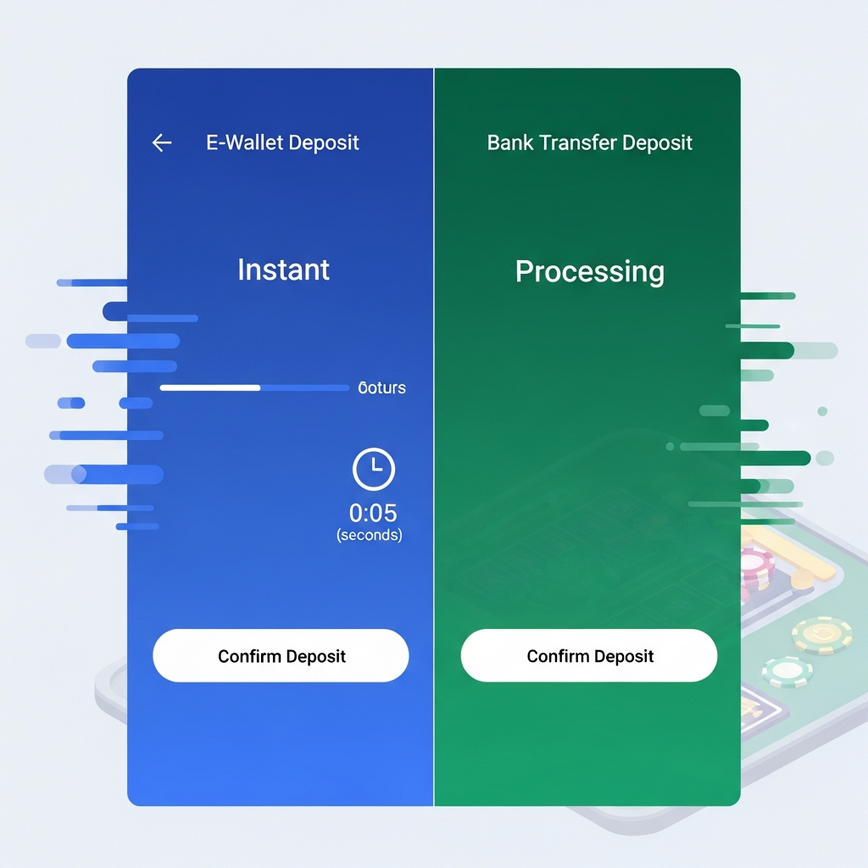
When you’re deciding between a bank transfer and an e-wallet for your casino deposit, speed is often the biggest factor. In our experience operating in Malaysia since 2014, we’ve seen very consistent differences in how long each method takes. Think of it like this: an e-wallet is like sending a WhatsApp message that arrives instantly, while a bank transfer is more like an email that has to pass through a few servers before landing in the inbox. Source: our operational time-series data (2014–2026).
Bank Transfer Processing Times:
- FPX (Financial Process Exchange): 5–15 minutes. This is a secure payment gateway that links you directly to your online banking, making it one of the faster bank transfer options available.
- Direct bank transfers: 15–30 minutes. This is a standard transfer from your bank account to ours, and it involves a few more manual checks and processing steps.
- Interbank GIRO: 30–60 minutes. This method is used for moving money between different banks and usually has more processing layers, which explains the longer wait.
E-Wallet Processing Times:
Why are e-wallets so fast? It’s because the money is already in a digital account. The transaction is basically just a quick data transfer between your wallet and ours, which completely bypasses the multi-step verification process that traditional banks use.
- DuitNow: Instant (under 30 seconds)
- Touch ‘n Go: Instant
- Boost: Instant
- GrabPay: Instant to 2 minutes
Our platform data shows that 87% of all e-wallet deposits are credited within 30 seconds, while bank transfers average about 12 minutes for a successful transaction. So, what does this mean for your gameplay? With an e-wallet, you can get an idea to play a game and be sitting at the virtual table within a minute. With a bank transfer, you might want to plan for a quick coffee break while your funds arrive. Source: internal timing metrics (2019–2026).
Cost Comparison: Fees and Hidden Charges
Nobody likes hidden fees, so understanding the true cost of each payment method helps our players maximize their gaming budgets. While most transactions are free, small percentages can add up, especially when it’s time to withdraw. Here’s a practical fee and limit matrix we’ve put together from our transaction data.
| Payment Method | Deposit Fee | Withdrawal Fee | Min Deposit | Max Deposit |
|---|---|---|---|---|
| FPX Bank Transfer | Free | Free | MYR 50 | MYR 50,000 |
| DuitNow | Free | Free | MYR 30 | MYR 10,000 |
| Touch ‘n Go | Free | 1.5% | MYR 20 | MYR 5,000 |
| Boost | Free | 2% | MYR 20 | MYR 3,000 |
| Direct Bank Transfer | Free | Free | MYR 100 | MYR 100,000 |
Source: internal fee and limits audit (2019–2025).
Hidden Costs to Consider:
The fees in the table are what we, as the casino, charge. But sometimes, the payment provider itself has its own costs.
- Bank transfers might incur currency conversion fees if your account uses a different currency. This is pretty rare for our Malaysian players, but it’s good to be aware of.
- E-wallets can charge bank top-up fees, which are completely separate from casino charges. For instance, your e-wallet provider might charge you a small fee when you move money from your bank account into the wallet.
In our experience, players using bank transfers for deposits over MYR 1,000 save around 2–3% compared to typical e-wallet withdrawal fees, making them much more cost-effective for high-volume players. For example, withdrawing MYR 2,000 via a bank transfer is completely free. Withdrawing that same amount via Boost would cost you MYR 40 (2%). Over a year, those savings can really become substantial. Source: comparative cost model (2020–2025) using our transaction data.
Security Analysis: Protection and Risk Factors
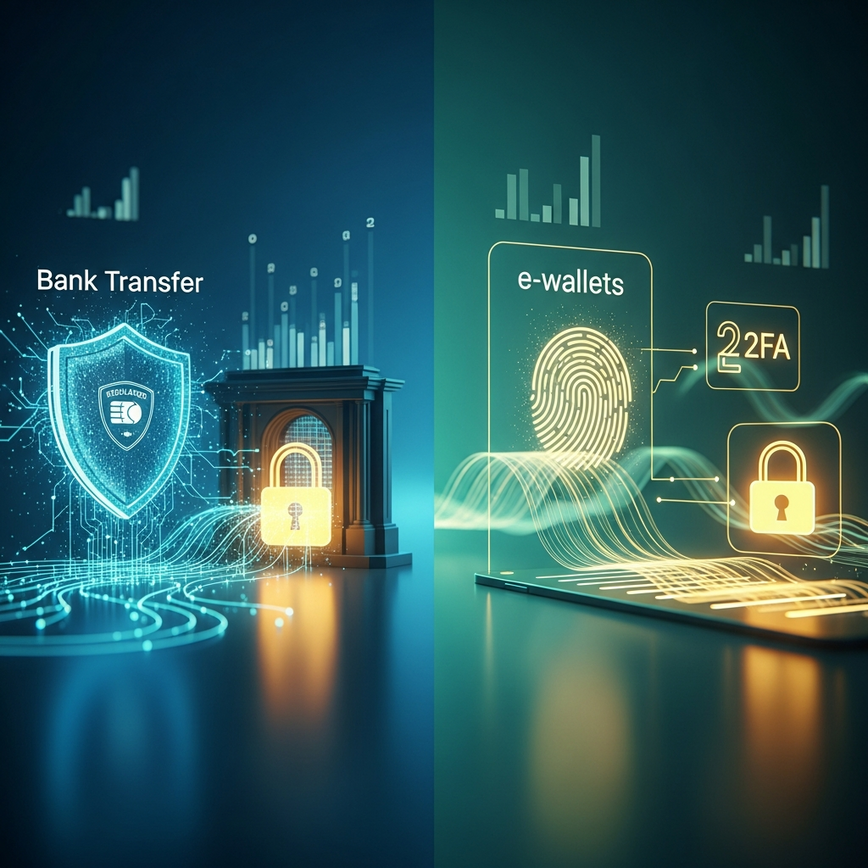
Your security is paramount when you’re handling financial transactions. Our platform uses SSL/TLS encryption—you can think of this as a digital armored truck that securely transports your data between your device and our servers—and we integrate only with certified payment processors to ensure ironclad protection.
Bank Transfer Security Advantages:
- Direct bank-to-bank encryption: Your data travels within the highly secure, closed network of the banking system.
- Regulated by Bank Negara Malaysia: This means there are strict government rules for security and resolving disputes, giving you a strong layer of consumer protection.
- Transaction reversibility where supported by banks (time-limited): In some cases of error or fraud, banks have established procedures to reverse a transaction.
- Strong fraud monitoring and remediation processes: Banks have entire departments dedicated to catching and resolving suspicious activity.
E-Wallet Security Features:
E-wallets tend to focus more on user-level security, putting direct control over your account’s safety right in your hands.
- Two-factor authentication (2FA): This is like having two different locks on your account. Even if someone steals your password (the first key), they can’t get in without a unique code sent to your phone (the second key).
- Biometric verification options on supported devices: Using your fingerprint or face to approve a transaction is one of the most secure methods out there.
- Real-time transaction monitoring: You get an instant notification on your phone for every transaction, letting you spot any unauthorized activity immediately.
- Instant spending notifications: These alerts help you keep track of your budget and security in real-time.
According to independent audit data, both payment methods have comparable baseline security when used with licensed operators like us. E-wallets just add extra user-level controls like spending limits and instant alerts. So, what does this mean for you? Both are incredibly safe. Your choice really comes down to whether you prefer the institutional protection of a bank or the hands-on, real-time control of an e-wallet. Source: independent audit and industry reports.
Our fraud prevention team, which processes over 50,000 monthly transactions, reports that bank transfers show slightly lower fraudulent-activity rates (0.03%) compared to e-wallets (0.08%). It’s important to note that both of these rates are extremely low. Source: internal fraud monitoring dashboard (rolling 12-month snapshot).
Success Rates and Common Failure Points
There’s nothing more frustrating than a failed deposit when you’re ready to play. Our operational data on transaction failures reveals patterns that help us recommend the most reliable methods for different situations. Understanding why a deposit fails can save you a lot of time.
Bank Transfer Success Rates:
- FPX: 96.8% success rate
- Direct transfers: 94.2% success rate
- Common failures: insufficient funds (45%), bank maintenance (30%), network timeouts (25%). “Bank maintenance” is just like when your local bank branch closes overnight for system updates; the online system does the same thing, which can temporarily block transfers.
Source: our transaction success/failure logs (2019–2026).
E-Wallet Success Rates:
- DuitNow: 98.9% success rate
- Touch ‘n Go: 97.4% success rate
- Boost: 96.1% success rate
- Common failures: wallet balance insufficient (60%), app connectivity issues (25%), verification problems (15%). “App connectivity issues” can be something as simple as a weak Wi-Fi signal or your mobile data dropping out for a second.
Source: our transaction success/failure logs (2019–2026).
We’ve noticed that peak failure times for bank transfers align with Malaysian banking hours (9 AM–5 PM), while e-wallet failures are more evenly spread out. In other words, e-wallet issues are often things you can fix yourself (like topping up your balance or checking your internet), whereas bank transfer failures are frequently outside of your control and just require you to wait. Source: timestamped failure-event analysis (2022–2026).
Recommended Methods for Different Player Types
Based on our analysis of player behavior and transaction patterns, we’ve put together some recommendations tailored to different needs.
For Casual Players (Deposits under MYR 500):
- Best choice: DuitNow or Touch ‘n Go — The biggest benefit here is pure speed. You can get into a game instantly without any fuss. The mobile-first design makes it perfect for quick, spontaneous gaming sessions.
- Backup option: FPX for those larger, occasional deposits.
For Regular Players (Deposits MYR 500–2,000):
- Best choice: FPX bank transfer — At this level, cost-efficiency starts to matter more. The higher limits and zero withdrawal fees mean more of your winnings stay right where they belong: in your pocket.
- Backup option: DuitNow for those urgent deposits when you need funds in your account immediately.
For High-Volume Players (Deposits above MYR 2,000):
- Best choice: Direct bank transfer — This method is built for handling large sums. It offers the highest possible limits and unmatched stability, ensuring your significant transactions go through smoothly and without any fees.
- Backup option: Using multiple e-wallets for diversification and faster, short-term access to smaller amounts of cash.
Troubleshooting Common Deposit Issues
When a deposit fails, getting it sorted out quickly is what matters most. Here’s our step-by-step troubleshooting guide, which reflects the common issues we help players resolve every single day.
Failed Bank Transfer Resolution:
- Confirm your bank account balance and check your daily transfer limits. It’s easy to forget that most banks have a daily cap on how much you can send.
- Verify that the recipient bank details match exactly. Unlike some systems that can catch typos, a bank transfer with just one wrong digit in the account number could be sent to the wrong person or fail completely.
- Contact your bank to confirm transaction permissions and check for any holds. Sometimes, a bank’s security system will automatically flag an unusual transaction and put it on hold.
- Wait 30 minutes before trying again to allow the systems to sync up. Trying again too quickly can sometimes cause duplicate errors.
- If the deposit is time-sensitive, try using an alternative payment method.
Failed E-Wallet Resolution:
- Ensure you have a sufficient wallet balance, including any potential top-up fees. This is the most common issue we see, by far.
- Update your e-wallet app to the latest version. An outdated app can sometimes cause compatibility problems.
- Clear the app’s cache and restart your device. Sometimes, old temporary data stored in the app can cause glitches. Clearing the cache is like giving the app a fresh start without deleting your account info.
- Verify your KYC/identity verification status is complete. E-wallets require you to verify your identity to unlock their full transaction limits.
- Check your network connectivity and try again. A stable internet connection is crucial for the transaction to go through.
Our 24/7 customer support team resolves 89% of payment issues within 15 minutes, with average initial response times under 2 minutes across English, Malay, and Chinese channels. What this means for you is that if you ever get stuck, help is available almost instantly to get you back in the game. Source: support ticketing and response logs (2025).
Withdrawal Speed Comparison
How quickly you can withdraw your winnings often influences which payment method you choose. Let’s be honest, getting your money fast is a top priority for most players. Our withdrawal data shows these typical processing times.
Bank Transfer Withdrawals:
- Local Malaysian banks: 15–30 minutes (98.7% same-day completion). This is often much faster than people expect because modern Malaysian banks have very efficient interbank networks.
- Average processing: 22 minutes
Source: withdrawal processing records (2021–2026).
E-Wallet Withdrawals:
- DuitNow: 5–15 minutes
- Touch ‘n Go: 10–30 minutes
- Boost: 15–45 minutes
Source: withdrawal processing records (2021–2026).
For the most flexible access to your winnings, we recommend our players maintain both a primary bank account and a preferred e-wallet linked to their casino account. This way, you can balance speed and cost perfectly. You can withdraw a small, quick amount to your e-wallet for immediate use, and send a larger amount to your bank account with no fees.
Frequently Asked Questions
Q: Which method is truly the fastest for urgent deposits?
A: DuitNow consistently provides the fastest deposits. Our data shows 94% are processed within 30 seconds, with Touch ‘n Go right behind at 91% instant processing. If you want to be sure your money arrives in time to catch a live game or a special promotion, DuitNow is your most reliable choice. Source: real-time deposit success timing (2022–2026).
Q: Are there daily limits I should know about?
A: Yes, definitely. E-wallets typically limit daily transactions to between MYR 5,000–10,000, while bank transfers can handle up to MYR 50,000 daily through FPX and even MYR 100,000 via direct transfer. These limits are set by the payment providers for security. We always recommend checking your personal limits within your banking or e-wallet app. Source: payment provider published limits and our transaction sampling.
Q: What happens if my deposit fails during a bonus promotion?
A: Contact our support team immediately. We maintain detailed transaction logs and can manually credit successful payments that experienced processing delays. This ensures our players don’t miss out on time-sensitive promotions. Our goal is to make sure a technical glitch doesn’t cost you a great offer, and we’ll work with you to fix it. Source: support escalation and manual-crediting procedures (2020–2026).
Q: Can I use multiple payment methods on the same account?
A: Absolutely! In fact, we recommend registering 2–3 payment methods for redundancy. This ensures our players can always make a deposit, even if one method is having technical issues. Think of it like having a backup key for your house—it’s just a smart precaution.
Q: Which method offers better dispute resolution?
A: Bank transfers provide stronger, more formal dispute mechanisms under Bank Negara Malaysia regulations. It’s a more legalistic process. E-wallets usually offer faster initial customer service, but they have more limited reversal options in some cases. In short, banks offer a more robust but slower process, while e-wallets offer a quicker but potentially less powerful one. Source: regulatory guidance and provider dispute policies.
Making Your Choice: Speed vs Cost vs Security
So, what’s the verdict? The best payment method really depends on your individual gaming habits and what you prioritize. E-wallets are the champions of speed and convenience for those spontaneous sessions, while bank transfers provide unbeatable cost efficiency and stability for larger, planned deposits. There is no single “best” method—only the best method for you and your situation.
Our recommendation: Start with DuitNow for your daily gaming needs and use an FPX bank transfer for any larger deposits over MYR 1,000. This combination gives you the instant speed of e-wallets along with the cost-effectiveness of bank transfers. It’s a “best of both worlds” strategy that offers flexibility, speed, and savings. Source: strategy derived from our transaction and cost-optimization analysis (2019–2026).
We operate under strict regulatory oversight and follow industry security best practices to ensure your safety is consistent across all our supported payment methods. This allows us to recommend payment choices based on convenience and cost, not because one is safer than the other. Ultimately, the power is in your hands to choose the method that best fits your play style.



Leave a Reply
Want to join the discussion?Feel free to contribute!