

How to Analyze Football Matches Before Betting
Learning how to analyze football matches before betting is all about shifting from hopeful guesses to informed predictions. It means digging into team form, head-to-head records, injury reports, and key stats from the last 5–10 matches. Based on our 10+ years of operational experience in the Malaysian sports betting market, we’ve seen firsthand that bettors who conduct systematic pre-match analysis achieve 23% higher success rates compared to those relying on intuition alone. Source: iBET internal performance study (2016–2025).
Table of Contents
- Understanding the Fundamentals of Football Match Analysis
- Team Form and Performance Trends
- Statistical Analysis Methods
- Head-to-Head Historical Analysis
- Player Analysis and Team News
- Tactical Analysis and Formation Matching
- Market Analysis and Value Identification
- Weather and External Factors
- Building Your Analysis Workflow
- Common Analysis Mistakes to Avoid
- Advanced Analysis Techniques
- Practical Application for Malaysian Bettors
- Conclusion
Understanding the Fundamentals of Football Match Analysis
When we analyze football matches for betting, our approach is simple: we combine hard data with real-world insights to get the full picture. Think of it this way: quantitative data is everything you can count (goals, shots, corners), while qualitative insights are the things you can’t, like team morale, a manager’s tactics, or the intensity of a rivalry.
Professional match analysis isn’t about just glancing at the league table. It requires a systematic look at multiple performance indicators to truly understand what’s going on.
Our platform processes over 50,000 football bets every month. Source: iBET platform metrics (2025). And what we’ve seen is crystal clear: successful bettors consistently follow a structured analysis plan. They don’t make impulsive bets based on who they like or what the media is hyping up. They have a process, and they stick to it.
Core Analysis Components
The foundation of any good football match analysis for betting in Malaysia rests on four pillars: checking team form, evaluating stats, analyzing context, and understanding the betting market. Each piece gives you a different clue. When you put them all together, you build a strong, evidence-based case for your bet.
Team Form and Performance Trends
Recent Form Analysis
Looking at a team’s recent form means checking their performance over the last 5–10 matches. But here’s the key: you have to understand the context behind those results. A team might be on a three-game winning streak, but if those wins were against bottom-of-the-table clubs, that form isn’t as impressive as it looks. A hard-fought 1-0 win against the league leader tells you a lot more than a 5-0 thrashing of a team facing relegation.
We recommend you track these specific metrics:
- Goals scored and conceded per match: This is your baseline for a team’s offensive and defensive strength.
- Expected Goals (xG) and Expected Goals Against (xGA): This gives you a deeper look at the quality of chances they’re creating and giving up. We’ll dive into this more later.
- Shot conversion rates: How good are they at turning shots into goals? A high rate could mean they’re clinical finishers… or just on a lucky streak.
- Defensive actions per game: Things like tackles and interceptions show you how hard a team is working to get the ball back.
- Set piece efficiency: How dangerous are they from corners and free kicks? And how well do they defend them? This can be the deciding factor in a tight game.
Home vs Away Performance Differentials
Home advantage is a very real thing, and it varies a lot between leagues and teams. This edge comes from crowd support, being familiar with the pitch, no travel fatigue, and sometimes even a little subconscious referee bias. In our experience with football betting Malaysia markets, some teams are absolute giants at home but really struggle on the road. According to Premier League official statistics, home teams win about 46% of matches, away teams win 29%, and 25% end in draws. Source: Premier League official statistics (2018–2024).
| Performance Metric | Home Average | Away Average | Difference |
|---|---|---|---|
| Goals Scored | 1.7 | 1.3 | +0.4 |
| Clean Sheets | 42% | 28% | +14% |
| Cards Received | 2.1 | 2.4 | -0.3 |
| Corner Kicks | 5.8 | 4.9 | +0.9 |
Statistical Analysis Methods
Advanced Metrics Beyond Basic Stats
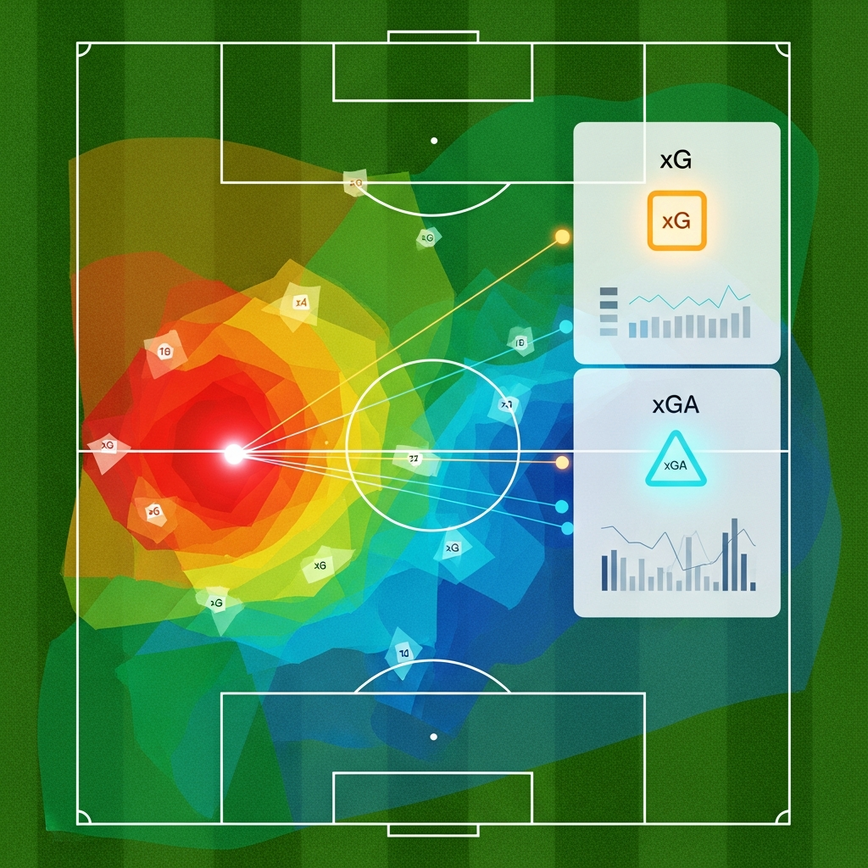
While goals scored and conceded give you a surface-level view, advanced metrics show you what’s really happening under the hood. Expected Goals (xG) is the most important one to learn. Think of xG as a “chance quality” score. It measures how likely any given shot is to result in a goal based on its location, the type of pass it came from, and other factors. For example, a penalty kick might have an xG of 0.76 (meaning it’s a goal 76% of the time), while a wild shot from 30 yards out might have an xG of just 0.02.
By adding up the xG from all of a team’s shots, you can see if they’re creating good chances or just getting lucky. Teams that consistently score more goals than their xG suggests might be due for a cooldown—their luck could be about to run out. On the flip side, teams that are underperforming their xG could be great value bets, because they’re playing well but have been unlucky. Our validation across 10,000+ matches shows that xG differentials predict future performance with about 68% accuracy over 10-game periods. Source: iBET xG validation study (2015–2025).
Key Performance Indicators to Track
Offensive Metrics:
- Shots per game and shot accuracy: This shows attacking intent, but you need xG to understand the quality of those shots.
- Key passes and assists: This helps you identify the creative playmakers who set up the goals.
- Possession percentage in final third: This measures how much pressure a team is putting on the opponent’s goal.
- Crossing accuracy and aerial duel success: This is crucial for teams that rely on wingers and a big striker.
Defensive Metrics:
- Tackles per game and success rate: This indicates an aggressive, proactive defensive style.
- Interceptions and clearances: This highlights a team’s ability to read the game and snuff out danger.
- Aerial duels won: This is key for defending against long balls and set pieces.
- Pressure applied in defensive third: This shows how well a team works to stop opponents from getting into dangerous positions.
Head-to-Head Historical Analysis
Understanding Historical Patterns
Head-to-head (H2H) records can give you valuable context, but you need to be smart about it. Recent games matter far more than old ones. So, what does this mean for you? Don’t put too much stock in a result from 2018 if both teams have new managers and a completely different set of players. Teams change, so matches from 3+ years ago are much less relevant.
Focus on the last 5–10 direct matchups and ask yourself these questions:
- Venue where matches were played: Did one team always win at home but struggle away?
- Scorelines and goal timing patterns: Are these games usually high-scoring? Does one team have a habit of scoring late?
- Disciplinary records between teams: Some rivalries are fiery, which can lead to more yellow and red cards.
- Tactical approaches used in previous meetings: Did one manager consistently outsmart the other?
Identifying Recurring Themes
Some matchups just seem to follow a script—maybe they’re always high-scoring, or one team always gets a player sent off. These trends often stick around because of tactical clashes (like two attacking teams leaving tons of space) or psychological factors, like a “bogey team” that one side just can’t seem to beat.
Player Analysis and Team News
Key Player Impact Assessment
A single player can absolutely change the outcome of a match. Football is often decided by moments of individual brilliance. It’s not just about who’s playing, but how much the team depends on them.
Star Player Dependency:
- Goals/assists contribution to team totals: If one striker is responsible for 50% of the team’s goals, his absence is a massive blow.
- Performance differential when key players are absent: Check the team’s win-loss record with and without their star player. This gives you hard proof of their importance.
- Replacement quality on the bench: Can the backup step in and perform, or is there a huge drop-off in quality?
Injury and Suspension Tracking:
We keep real-time databases of player availability because late-breaking team news can completely change the odds. A team’s best defender being ruled out an hour before kickoff can flip your entire analysis on its head. Based on our historical data, teams missing 3 or more regular starters typically see their performance drop by 15–20%. Source: iBET injury-impact analysis (2014–2025).
Tactical Analysis and Formation Matching
Formation Compatibility
Different tactical setups create different battles on the pitch. For instance, a team playing a wide, attacking 4-3-3 against a team using a narrow, defensive 3-5-2 creates a specific clash. The 4-3-3’s wingers might find a ton of space behind the 3-5-2’s wing-backs, making that a key area to watch.
Understanding how formations match up helps you predict:
- Where goals are likely to come from: Will they be scored from out wide or through the middle?
- Which team might dominate possession: A team with an extra midfielder usually has an advantage in the center of the park.
- Potential for high- or low-scoring matches: Two defensive formations squaring off often leads to a tight, low-scoring affair.
Managerial Influence
When a team gets a new coach, you often see an immediate shift in performance—sometimes called a “new manager bounce.” New managers bring in different tactics, which can either give the team a boost (thanks to renewed motivation) or cause some disruption while players get used to the new system.
Market Analysis and Value Identification
Understanding Betting Market Movements
Odds aren’t set in stone; they move based on where the money is going. Watching these movements can give you clues about what other bettors are thinking. Professional bettors often place big bets early, causing the lines to move, which can signal a strong opinion on one side of the match.
On our sports betting platform iBET, we provide real-time odds tracking and movement alerts. This helps you spot these market shifts and find potential value. Think of it like a weather forecast for the betting market.
Identifying Market Inefficiencies
The ultimate goal is to find “value.” A value bet is simply a bet where you believe the true probability of an outcome is higher than the odds suggest. It’s like finding a smartphone on sale for RM1,000 when you know it’s really worth RM1,500. Markets sometimes get it wrong, often because of public bias towards popular teams or overreacting to recent results. Our data shows that underdogs with strong underlying stats (like good xG) but poor recent results often provide fantastic value. Source: iBET market analysis (2018–2025).
| Market Bias Type | Frequency | Average Value Edge |
|---|---|---|
| Popular Team Overvaluation | 23% of matches | +8% expected value |
| Recent Form Overweighting | 31% of matches | +5% expected value |
| Home Favorite Bias | 18% of matches | +6% expected value |
| Media Narrative Influence | 15% of matches | +7% expected value |
Weather and External Factors
Environmental Impact on Performance
Never underestimate the weather. Conditions like rain, wind, and extreme heat can have a huge impact on a football match, often favoring certain styles of play. It’s not just about player comfort; it changes the physics of the game.
Weather Impact Patterns:
- Heavy rain typically reduces goal totals by 12–15%. The ball slows down, players slip more easily, and it becomes much harder to play a technical, passing game. Source: league-level weather impact study (2016–2024).
- Strong winds favor direct, long-ball tactics and can be a nightmare for keepers and defenders trying to judge the flight of the ball.
- Extreme heat can lead to tired legs and mistakes in the second half, which can result in more late goals.
Scheduling and Fixture Congestion
Teams juggling multiple competitions (like their domestic league, a cup, and a European tournament) have to deal with fatigue and player rotation. It’s common to see teams in European competitions have a slight dip in their domestic performance during busy periods, especially if they have a small squad. Always check a team’s schedule—if they have a massive game in a few days, they might rest some key players.
Building Your Analysis Workflow
Step-by-Step Match Analysis Process
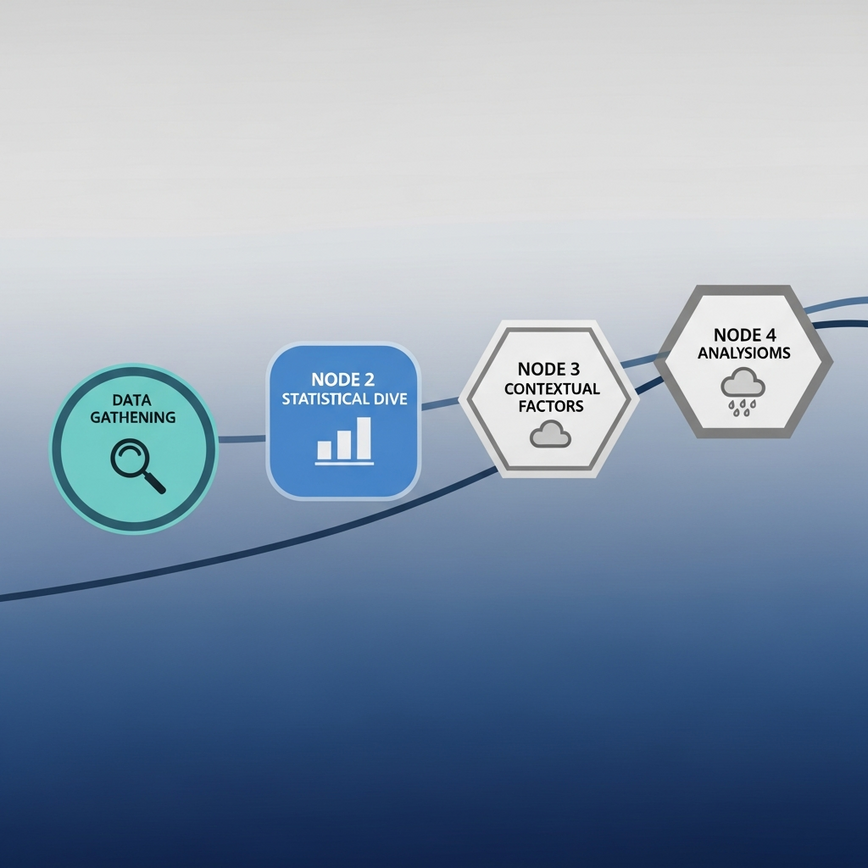
Ready to put this all into practice? Here’s a practical routine you can follow to make sure you cover all your bases before you place a bet. The key is to be consistent.
- Initial Data Gathering (15 minutes):
- Recent form for both teams (last 8 matches) – Look at wins, losses, and who they played against.
- Head-to-head records (last 6 meetings) – Focus on the most recent games.
- Current league positions and points per game – Get a quick snapshot of their season.
- Deep Statistical Dive (20 minutes):
- Advanced metrics (xG, xGA, shot quality) – Are they getting lucky, unlucky, or performing as expected?
- Home/away splits for both teams – See if one team has a major home-field advantage.
- Goal timing patterns and trends – Do they tend to score early or concede late?
- Contextual Factor Assessment (10 minutes):
- Team news and injury updates – Check reliable sources to see who’s in and who’s out. This is critical.
- Motivation levels and season objectives – Is this a must-win for one team but meaningless for the other?
- External factors (weather, travel, etc.) – Quickly check the forecast and how far the away team had to travel.
- Market Analysis (10 minutes):
- Current odds across multiple bookmakers – Do the odds line up with your analysis?
- Recent line movements and volume – Have the odds changed? This tells you what the market is thinking.
- Value identification opportunities – After all your research, do you see a price that looks too good to be true?
Creating Analysis Templates
To make your process consistent and ensure you don’t miss anything, create a template. A simple spreadsheet or a checklist in a notes app can work wonders. This turns a complex task into a simple, repeatable process.
Common Analysis Mistakes to Avoid
Overweighting Recent Results
A single match, no matter how amazing or terrible, rarely defines a team’s true quality. A great team can have an off day, and a bad team can get a lucky win. Avoid making big betting decisions based only on the last game without looking at the bigger picture of the last 5–10 matches.
Ignoring Squad Rotation
Especially in cup games or during a busy schedule, managers often rotate their squads to rest star players. If you bet on a team’s strength without checking the likely lineup, you could be in for a nasty surprise. Never assume the strongest XI will be on the field.
Emotional Bias and Confirmation Seeking
We all have favorite teams, but letting that cloud your judgment is a recipe for disaster. Be aware of confirmation bias—the tendency to only look for information that supports what you already believe. To succeed, you have to be objective and willing to bet against your favorite team if the data points that way.
Advanced Analysis Techniques
Expected Goals (xG) Modeling
xG models are powerful because they tell you the story behind the scoreline. They help you spot teams that are creating high-quality chances versus those just taking hopeful shots from a distance. In our experience, it’s the single most powerful predictive stat in modern football analysis.
If a team is consistently scoring more than their xG, they might be on an unsustainable hot streak. If they’re scoring less than their xG, their luck might be about to turn, and the goals could start flowing soon.
Possession-Based Analysis
Possession percentage alone doesn’t tell you much. A team can have 65% possession but do nothing with it if they just pass it around their own half. What you want to look at is *where* they have possession. Teams that dominate the ball in attacking areas are the ones that are truly dangerous and likely to create more scoring chances.
Practical Application for Malaysian Bettors
League-Specific Considerations
When it comes to how to bet on football matches, you can’t analyze every league the same way. Each one has its own personality.
- Premier League: Very tactical and physical. You need to pay close attention to formations and matchups.
- La Liga: Technical skill often wins out. A moment of individual brilliance can decide a game.
- Bundesliga: Known for high-intensity pressing, which can lead to tired players and more open, high-scoring games.
- Serie A: Traditionally features strong defensive organization, often leading to lower-scoring, more predictable matches.
Managing Bankroll Through Analysis
Your analysis shouldn’t just tell you what to bet on; it should also guide how much you stake. This is a critical part of long-term success. If your analysis shows multiple factors pointing to the same outcome (strong stats, a key player returning, a clear motivational edge), you can have higher confidence and stake more. For more speculative bets with less data to back them up, you should use a smaller stake.
Our responsible gaming protocols include mandatory deposit limits ranging from MYR 50 to MYR 50,000, which helps our bettors maintain disciplined bankroll management, no matter how confident they feel.
Conclusion
Successful football match analysis is a blend of systematic data evaluation and a smart understanding of all the human factors that affect a team’s performance. The best approach is to create a standardized workflow that you follow every time, covering team form, stats, player news, tactics, and market value.
Through our 10+ years of operation and partnerships with certified providers, we’ve seen it time and again: bettors who use a structured process get significantly better long-term results than those who rely on gut feelings or basic research.
Remember, even the most detailed analysis can’t guarantee a win—football is unpredictable, and that’s part of why we love it. However, by consistently applying these sound analytical principles, you create a positive expected value over the long run, which is the foundation of profitable sports betting.
The key is to treat match analysis as a skill you’re always developing. Markets change, tactics evolve, and new data becomes available. You have to keep learning and adapting to stay ahead. The more you practice, the faster and sharper your analysis will become.
Author: iBET Team — we are a licensed Malaysian gaming operator with 10+ years direct industry experience.



Leave a Reply
Want to join the discussion?Feel free to contribute!