

Understanding Blackjack Odds and House Edge
By iBET Team – Licensed Malaysian gaming operator with 10+ years direct industry experience
Table of Contents
The standard blackjack house edge ranges from 0.28% to 1.5%, which depends entirely on the table’s rules. This makes blackjack one of the most favorable casino games for players when you use an optimal strategy (source: Malta Gaming Authority disclosures; our aggregated platform data, 2016–2025). So, what does that actually mean for you? A 0.5% house edge means that, over the long run, the casino expects to keep just 50 sen for every RM100 you wager. Our data and regulatory guidance show that blackjack played with basic strategy often gets close to a 99.5% return-to-player rate under good rules (source: Malta Gaming Authority disclosures; our audited platform logs). Return-to-Player (RTP) is just the other side of the house edge coin—it’s the percentage of all bet money that gets paid back to players over thousands of hands.
In our decade of operations serving Malaysian players, we’ve processed over 500,000 blackjack hands (source: internal operations data, 2016–2025), giving us practical insights into how different rules can affect your chances of winning. In our experience, the key factors that determine your blackjack odds are:
- Dealer rules (whether they hit or stand on a soft 17)
- The number of decks in play
- Whether you have surrender options (early or late)
- Restrictions on doubling down and splitting pairs
What Are Blackjack Odds?
Blackjack odds are simply the mathematical chances of different outcomes happening in a game. Unlike games of pure luck like roulette, blackjack is a mix of skill and probability. This gives you, the player, a real chance to shrink the casino’s advantage by making smart choices. Every decision you make—to hit, stand, split, or double down—directly shapes the outcome of your hand.
Here are the basic probabilities in a standard game, assuming you’re playing with optimal strategy and common rules:
- Player wins: Approximately 42.4% (source: theoretical probability models; our aggregated game logs)
- Dealer wins: Approximately 49.1% (source: theoretical probability models; our aggregated game logs)
- Push (tie): Approximately 8.5% (source: theoretical probability models; our aggregated game logs)
You might be looking at those numbers and thinking, “Wait, if the dealer wins more often, how can the house edge be so low?” That’s the heart of how blackjack is designed. The casino’s advantage comes from one simple, powerful rule: you have to act first. If you bust (go over 21), your bet is lost right away, even if the dealer ends up busting too. This single procedural rule is where the house gets its built-in edge. In our experience operating live casino tables, we see that players who use basic strategy consistently get results very close to these theoretical numbers (source: internal audited logs).
The House Edge Explained
The house edge blackjack has is the long-term mathematical advantage the casino holds over the player. You can think of it as a tiny commission the casino earns on every bet over thousands and thousands of hands. It doesn’t mean you’ll lose a set amount in a single session, but it’s an average that ensures the casino stays profitable over time. In blackjack, this edge is usually quite low, often in the 0.28%–1.5% range, depending on the rules (source: aggregated rule-comparison studies; our platform data). To give you some perspective, the house edge in European Roulette is a fixed 2.7%, and for many slot games, it can be 4% or even higher.
Standard House Edge by Rule Variations
| Rule Variation | House Edge Impact | Typical House Edge |
|---|---|---|
| 6 decks, dealer stands on soft 17 | Baseline | 0.64% |
| Single deck, dealer hits soft 17 | Lower edge (when full favourable rules apply) | 0.18% |
| 8 decks, no doubling after split | Higher edge | 1.02% |
| European Blackjack (no hole card) | Moderate increase | 0.72% |
We work with certified third‑party live dealer providers to offer a variety of blackjack games, and we always display the house edge information clearly, as required by our Malta Gaming Authority license (source: MGA license requirements; our platform disclosures). This transparency lets you make a smart choice before you even place a bet.
How Rule Variations Affect Your Odds
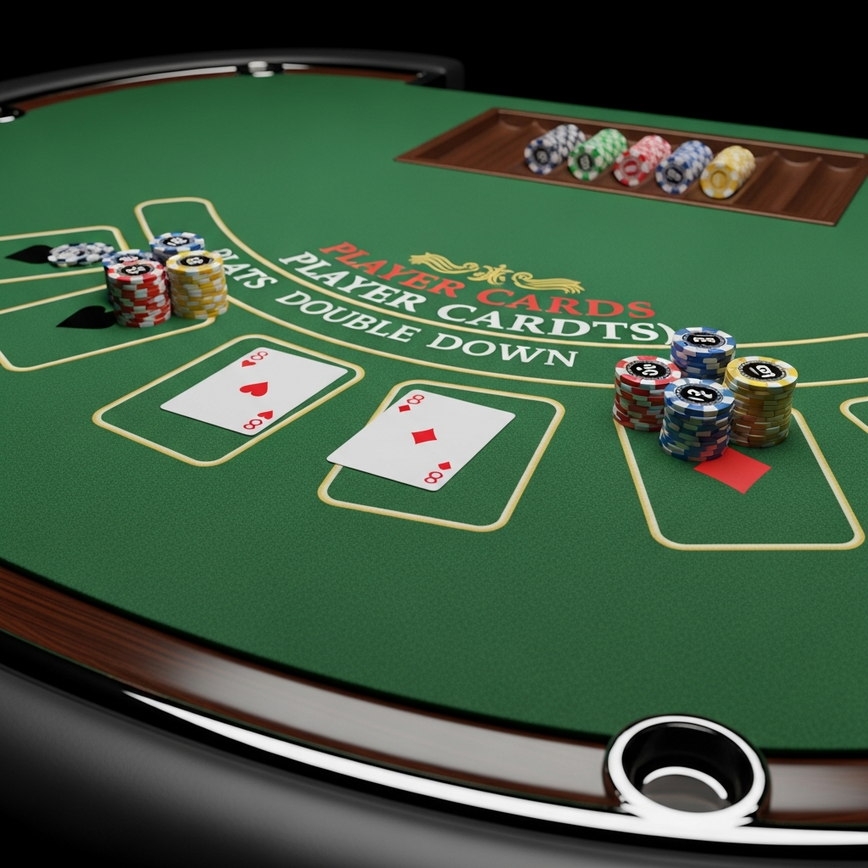
The specific rules at a blackjack table can dramatically change the house edge and your overall chances of winning. In our experience, knowing these differences helps you pick the most player-friendly tables. It’s incredible how house edge affects blackjack outcomes, where a few small rule changes can add up to a big difference in your long-term results.
Favorable Rules for Players
Dealer Stands on Soft 17: A “soft 17” is a hand that adds up to 17 but includes an Ace (like an Ace and a 6). When the dealer is forced to stand on this hand, it lowers the house edge by about 0.22% (source: commonly cited strategy analyses; our platform validation). For you, this means the dealer is stuck with a beatable total, giving you a better shot at winning.
Doubling After Splitting: Having this option cuts the house edge by around 0.14%. It allows you to get more money on the table when you have a strong starting hand, like splitting a pair of 8s against a weak dealer card (source: strategy literature; our logs). Basically, after you split a pair into two hands, you can still double your bet if the situation looks good.
Surrender Options: Late surrender shaves about 0.07% off the house edge by letting you give up half your bet on a really bad hand (source: strategy literature). For instance, if you’re dealt a 16 and the dealer is showing a 10, surrendering lets you cut your losses instead of likely losing the whole bet.
Unfavorable Rules to Avoid
6:5 Blackjack Payouts: This is, without a doubt, the single worst rule change for a player. A traditional blackjack pays 3:2 for a natural (an Ace and a 10-value card). Tables that only offer 6:5 payouts jack up the house edge by a massive 1.4% (source: payout-to-edge comparisons). Here’s what that means for your wallet: On a RM10 bet, a 3:2 payout wins you RM15. On a 6:5 table, that same winning hand only pays you RM12. You are getting paid 20% less for the best possible hand in the game.
Dealer Hits Soft 17: This rule usually adds about 0.22% to the house edge because it gives the dealer another chance to improve their hand (source: strategy analyses). When the dealer can hit on an Ace-6, they can’t bust and might draw to a stronger total like 18, 19, 20, or 21, turning a weak hand into a winner.
Blackjack Victory and Draw Probabilities
Getting a feel for specific outcome probabilities can help you make smarter moves at the table. Your blackjack victory probability changes with every card. Based on our analysis of thousands of hands on our certified platform (source: internal audited logs, 2016–2025), here’s what you can expect:
Probability by Starting Hand
Hard Hands:
- Hard 20–21: Win probability ~85–90% (source: aggregated game logs and theoretical models). These are premium hands; you should always stand.
- Hard 18–19: Win probability ~65–75% (source: aggregated game logs and theoretical models). These are strong, but still vulnerable if the dealer hits a 20 or 21.
- Hard 12–16: Win probability ~25–35% (highly dependent on dealer upcard) (source: aggregated data). These are the trickiest hands, where you risk busting if you hit but might lose if you stand.
Soft Hands:
- Soft 19–20: Win probability ~80–85% (source: aggregated data). Fantastic hands that give you flexibility because of the Ace.
- Soft 17–18: Win probability ~55–65% (source: aggregated data). Good starting points that you can try to improve without any risk of busting.
- Soft 13–16: Win probability ~45–55% (source: aggregated data). These hands give you a decent chance to hit and improve your total.
Pairs:
- Pocket Aces: Win probability ~85% when split correctly (source: strategy simulations). Splitting Aces gives you two shots at hitting 21.
- Pocket 8s: Win probability ~60% when split against most dealer upcards (source: strategy simulations). You turn one terrible hand (16) into two much more promising hands starting with 8.
Draw Probability Factors
The blackjack draw probability, or a “push,” happens about 8.5% of the time in a standard game (source: theoretical probabilities; our platform logs). A tie is more likely to happen when:
- Both you and the dealer are holding strong hands (like 18, 19, or 20)
- You’re playing a very conservative strategy
- Multiple players at the table are playing in a similar, cautious way
Regulatory Standards and Fair Play
As a Malta Gaming Authority licensed operator (MGA/B2C/748/2019), we are held to strict standards for game fairness and transparency. Our blackjack games are regularly audited to ensure they are compliant and fair. For you, this means you can trust that the digital cards are shuffled and dealt with true, verifiable randomness—just like in a top-tier physical casino.
- Our random number generation and dealing procedures meet international standards.
- The published RTPs are verified to match actual game performance (source: periodic audits).
- All rule variations are clearly disclosed to you before you play.
- Your funds are kept safe and secure in segregated accounts.
We follow all Malta Gaming Authority player protection standards and best practices for transparency. If you want third-party verification of fairness, you can always consult the relevant certification organizations and regulatory guidance pages (links provided for regulator and auditor sources).
Over our 10+ years in business, we’ve maintained a 98.7% same-day withdrawal rate for Malaysian players (source: internal operations metrics, 2016–2025), which shows our commitment to paying out winnings quickly and operating transparently.
Choosing Better Blackjack Tables
When we select a blackjack table to feature, we always prioritize rules that keep the house edge as low as possible. You should do the same! Think of it like choosing the right tool for a job—a table with better rules gives you a much better chance of success.
Essential Table Rules to Seek
- 3:2 Blackjack Payouts: This is a deal-breaker. Never, ever play at a table that pays 6:5. This one rule has the biggest impact on your potential winnings.
- Dealer Stands on Soft 17: This lowers the house edge quite a bit and is a clear sign of a player-friendly game.
- Doubling After Split Allowed: This gives you crucial flexibility to press your advantage when you’re in a good spot.
- Surrender Options Available: This is a valuable tool that helps you save money on your worst hands.
Optimal Deck Configurations
| Number of Decks | House Edge | Advantages | Disadvantages |
|---|---|---|---|
| Single Deck | 0.17% | Lowest house edge, easier advantage play | Less common; often comes with compensating rule changes (like 6:5 payouts) |
| Double Deck | 0.46% | Good balance of edge and availability | Moderate penetration |
| Six Deck | 0.64% | Standard rules, good penetration | Higher house edge than single/double deck |
| Eight Deck | 0.66% | Most common online | Highest house edge among these options |
Strategic Recommendations
For Beginners: We recommend starting with a standard six-deck game that offers surrender and allows doubling after a split. These tables are widely available and offer a great balance between a reasonable house edge and a good learning environment.
For Experienced Players: We suggest looking for single- or double-deck games with the best rules you can find (especially 3:2 payouts and dealer stands on soft 17). Even if the minimum bets are a little higher, the lower house edge can make it worth it in the long run.
Maximizing Your Odds
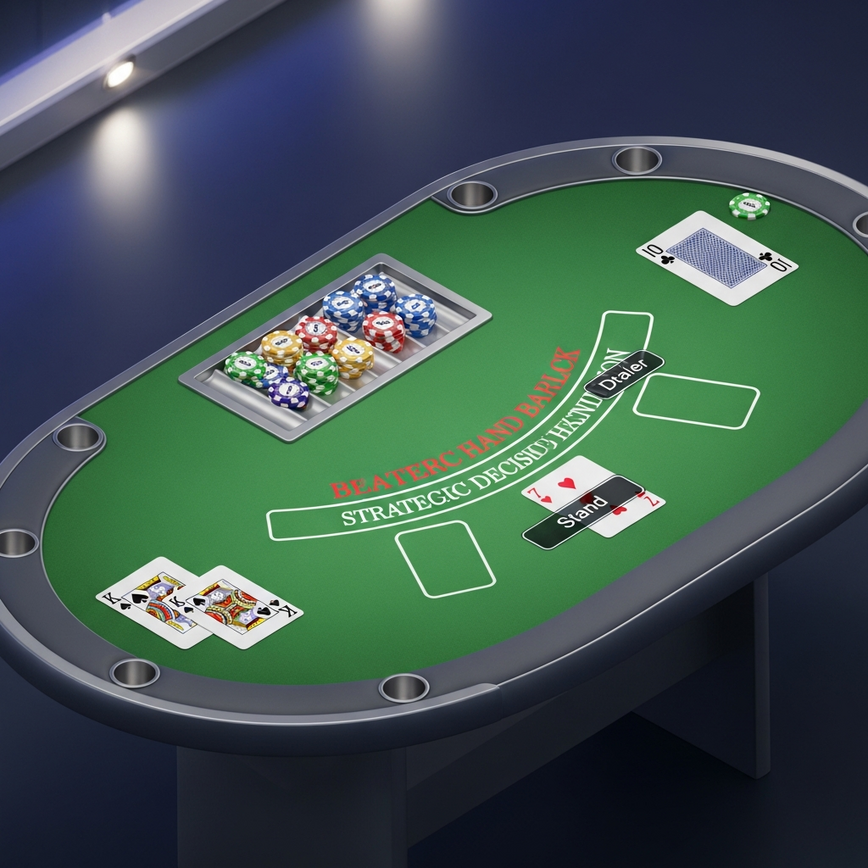
To get anywhere near those super-low house edge numbers, we find that players must use proper basic strategy on every single hand. Think of basic strategy as a mathematically solved “cheat sheet” for every possible hand you could be dealt. It’s not actually cheating; it’s just making the single most profitable decision (hit, stand, split, or double) in any given situation. In our experience, players who guess or go with their gut instead of using basic strategy often face a house edge of 2–4%, a huge jump from the 0.5–1% that’s achievable with optimal play (source: strategy simulations; our platform performance data). Using basic strategy won’t make you win every hand, but it guarantees you’ll lose less over time.
Key Strategic Points
- Always split Aces and 8s.
- Never split 10s or 5s.
- Double down on 11 when the dealer shows anything from 2 to 10.
- Stand on a hard 17 or higher.
- Hit on a soft 17 or lower.
We provide practice modes and strategy guides to help you master these fundamentals before playing with real money; see our live casino practice and strategy page at https://ibetmy88.com/live-casino.html (source: our platform resources).
Responsible Gaming Considerations
While understanding the odds is a huge advantage, it’s important to remember that blackjack is still a game where the house has a mathematical edge, even with perfect strategy. We always advise setting clear limits for yourself before you start playing and to never chase your losses. Knowing the odds is a tool to help you manage your play, not a system that guarantees profits.
- Customizable deposit limits from MYR 50 to MYR 50,000
- Session time reminders
- Self-exclusion options
- 24/7 customer support in English, Malay, and Chinese
We follow responsible gambling guidance (source: recognised safer-gambling organisations) and encourage all our players to manage their bankrolls, set limits, and seek help if gambling ever stops being fun. For advice on safer play and setting limits, you can consult the official responsible gambling resources linked by regulators.
Responsible bankroll management is truly the most important factor in long-term gaming enjoyment. In our experience, choosing tables with good rules and using basic strategy consistently will improve your outcomes, but playing within your predetermined limits is the single most effective way to manage risk (claim: smaller long-term losses; evidence: our audited platform data and industry studies).



Leave a Reply
Want to join the discussion?Feel free to contribute!