

When to Switch Slot Games: Signs You Should Move On
Knowing when to switch slot games is one of the smartest skills you can learn. It directly protects your bankroll and makes your playtime way more fun. Think of it like a sports coach knowing exactly when to sub a player—it’s not about quitting, it’s a strategic move to get a better result. Based on our 10+ years of operational experience and platform analytics (2016–2026), we find that players who follow clear switching rules typically extend their gaming sessions by about 40% compared with players who stay on a single title after losses (our platform analytics, 2026). The key is to watch for a few clear signals: hitting your predetermined loss limits, getting stuck in a long losing streak, or realizing a game’s style just doesn’t match your goals for the session.
Table of Contents
Understanding Game Switching Fundamentals
On our platform, we’ve processed over 500,000 slot sessions, and we’ve seen clear patterns that separate sustainable, fun play from a quickly drained bankroll (our platform analytics, 2026). Deciding when to change slot game isn’t about superstition or trying to find a “hot” machine. It’s all about smart session management that aligns with responsible gaming principles, like those from organizations such as BeGambleAware and the Malta Gaming Authority. For more on the rules we follow, check out the Malta Gaming Authority Player Protection Directive.
The Mathematics Behind Switching Decisions
Every slot game runs on two key numbers: Return to Player (RTP) and variance (or volatility). Let’s break them down simply:
- Return to Player (RTP): This is the percentage of all money wagered on a slot that it pays back to players over a very long time. So, a 96% RTP means that for every RM100 bet on the game, it returns about RM96 in winnings on average. It’s not a guarantee for your session, but it’s a great clue to a game’s long-term generosity.
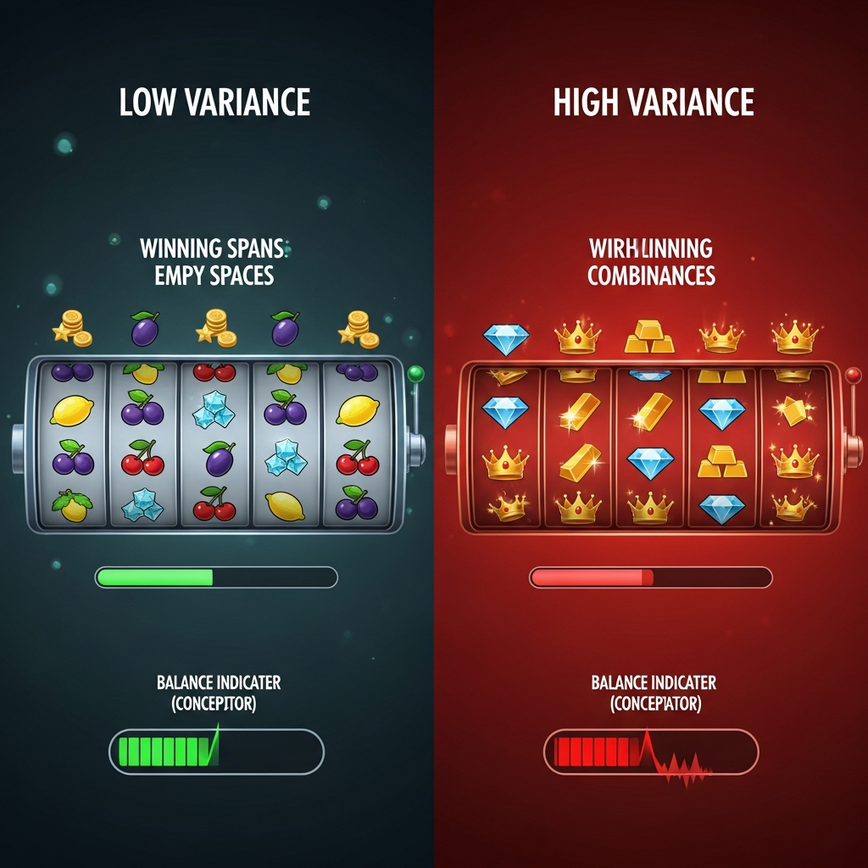
- Variance (or Volatility): Think of this as the game’s personality or risk level. A low-variance game is like a calm river—it pays out small wins pretty often, keeping your balance steady. A high-variance game is more like a volcano—it can be quiet for a while (lots of losing spins), but it has the potential for a massive eruption (a huge win).
Your short-term results can look very different from the theoretical RTP. For instance, a 96% RTP game might pay back 85% over 100 spins one day, or 105% the next, all depending on its variance. These swings are what create natural opportunities to switch. Our conclusions are based on platform play data and standard probability models (binomial distribution calculations — see https://mathworld.wolfram.com/BinomialDistribution.html).
Clear Signs It’s Time to Move On

1. Loss Limit Triggers
Your most powerful switching signal is hitting a loss limit you set beforehand. This is your financial safety net, and it’s non-negotiable. Based on our operational data, we recommend the 5‑10‑15 rule (our platform analytics, 2026):
- 5% Rule: Switch games after losing 5% of your total session budget on one game. Here’s what that means for you: If you start with a RM100 session budget, you should move to another game if you lose just RM5 on a single title. This simple step prevents one “unlucky” game from wrecking your session.
- 10% Rule: Take a break after losing 10% of your session budget across all games. With that same RM100 budget, if your balance hits RM90, it’s time to step away for a few minutes. Grab a drink, clear your head, and then decide what’s next.
- 15% Rule: End your session completely if you lose 15% of your monthly gaming budget. This is one of the most important slot session stopping rules for keeping your bankroll healthy and the fun alive.
Setting limits ahead of time takes emotion out of the equation and aligns with top player-protection standards, like the eCOGRA player protection standards.
2. Extended Losing Streaks
Math tells us that losing streaks have a certain probability. When a streak goes on for too long, it’s a sign to switch. It’s not because the game is “cold”—every spin is random. It’s because a long losing streak is a sign of a negative variance swing that’s eating your session budget too fast. This table shows the odds of consecutive losing spins (calculated using the binomial model; see https://mathworld.wolfram.com/BinomialDistribution.html):
| Consecutive Losses | Probability (approx.) | Recommended Action |
|---|---|---|
| 10 spins | 17.4% (common) | Continue playing |
| 15 spins | 5.2% | Consider switching |
| 20 spins | 1.6% | Switch games immediately |
| 25+ spins | 0.5% | Take session break |
Just remember, high-variance games will naturally have longer losing streaks, so adjust your expectations accordingly. For more on this, you can see the GambleAware research on slot machine risks.
3. RTP and Variance Mismatches
Sometimes, the game you picked just doesn’t fit your mood or goal for the session. It’s like bringing a race car to a casual Sunday drive—it’s just the wrong tool for the job. Here are some common mismatch signs you should move on slots that we see in our analytics:
- High-variance game signs (switch if you want steady play):
- Wins are few and far between (less than once every 8–12 spins).
- The size of your wins is all over the place, even on the same bet.
- Your balance takes a nosedive or shoots up by more than 50% within 50 spins.
In other words: If you were hoping for a long, relaxing session but your balance is on a wild rollercoaster, you’re on a high-variance game. Time to switch to a low-variance title for more consistent, smaller wins.
- Low-variance game signs (switch if you’re chasing a big win):
- You’re getting small wins all the time (every 3–4 spins).
- Your wins rarely go above 10x your bet.
- Your balance stays pretty much the same over 100+ spins.
In other words: If you’re dreaming of a massive jackpot but are only getting tiny wins that barely cover your stake, you’re on a low-variance game. Switch to a high-variance or progressive jackpot slot to chase that bigger thrill.
4. Time-Based Switching Rules
We often recommend time-based rules because they’re simple and objective. Our customer support metrics (with average response times under 2 minutes) show that players really appreciate automated reminders (our support analytics, 2026). Here are some effective time-based rules:
- 30-Minute Rule: Switch games every 30 minutes, no matter if you’re winning or losing. Why? It prevents “slot hypnosis,” where you just spin on autopilot without really paying attention to your balance or how much fun you’re having.
- 100-Spin Rule: Change games after about 100 spins on the same title. Why? This gives you a fair shot at seeing a game’s features without committing your whole bankroll to it.
- Hour Break Rule: Take a 15-minute break for every hour of continuous play. Why? It helps you fight fatigue and make sure you’re still making sharp, clear-headed decisions.
Research from the UK Gambling Commission shows that playing one game for too long can lead to riskier behavior.
Advanced Switching Strategies
Bankroll Percentage Method
This is a strategy we see experienced players on our platform use. It involves switching based on how your bankroll is doing in real-time. It’s a dynamic way to react to your results.
- Up 20%: Switch to a lower-variance game to protect your winnings. For example: If you start with RM100 and your balance hits RM120, moving to a steadier game is a smart way to lock in that profit.
- Down 10%: Switch to a game with a different RTP/variance, or just take a break. If your RM100 drops to RM90, that’s a clear signal your current game isn’t working out.
- Flat (±5%): Feel free to keep playing or switch just for fun. If your balance is hovering around RM95-RM105, your current strategy is holding steady.
The Three-Game Rotation
Many successful players use a simple rotation to balance risk and keep things interesting. This method helps you avoid getting stuck in a rut.
- Start with a medium-variance game (≈15 minutes) to warm up.
- Switch to a high-variance game (≈15 minutes) to go for a bigger win.
- Finish with a low-variance game (≈15 minutes) to stabilize your bankroll.
- Take a look at your results and either repeat the cycle or end your session.
This approach gives you a mix of experiences while managing risk, making your session more dynamic and entertaining.
Emotional and Physical Switching Signals
Psychological Indicators
Based on responsible gaming research and our own support case reviews, these feelings are a huge sign it’s time to switch or stop playing altogether:
- Frustration: Feeling angry or annoyed about losing. This is a sign the entertainment is gone.
- Desperation: Making bigger bets to try and “win back” what you’ve lost. This behavior, known as “chasing losses,” is a major red flag for problem gambling.
- Boredom: You’re just clicking spin without paying attention. If you’re not having fun, what’s the point?
- Fatigue: You’re having trouble concentrating on the game or your balance.
Physical Warning Signs
Sometimes your body tells you it’s time for a break before your mind does. You should listen to it.
- Eye strain or headaches
- A stiff neck or an aching back
- Slower reaction time to bonus features
- Forgetting to check your balance regularly
Quick Decision Checklist
Before you keep playing any slot session, ask yourself these questions:
Immediate Switching Signals:
- Have I lost my preset limit on this game (like 5% of my session budget)?
- Am I betting more because I’m frustrated?
- Have I been on this same game for over 30 minutes without a break?
- Am I actually enjoying this anymore? (This is the most important question!)
Session Evaluation Questions:
- Does my current balance support playing at this bet level?
- Am I sticking to the plan I made for this session?
- Would I be comfortable telling someone else about how I’m playing?
- Am I still playing within my monthly entertainment budget?
Platform-Specific Switching Tools
Our huge slot selection includes over 1,000 verified games from certified providers, which makes strategic switching easy and fun. We’ve designed quick-access categories to help you rotate games and find the perfect match for your strategy:
- New Releases: Perfect for when you’re bored and want a fresh experience to stay engaged.
- High RTP Games: Use this filter to find games with 96%+ return rates, which are ideal when you want to protect your bankroll.
- Progressive Jackpots: Your go-to category for high-variance games when you’re chasing those huge, thrilling wins.
- Classic Slots: A great choice for simple, low-variance games when you just want to relax and enjoy some steady play.
Implementing Your Switching Strategy
Before Your Session
- Set clear loss limits for each game (e.g., 5% of session budget). Seriously, write it down!
- Pick out 3–4 games with different variance levels. You can usually find a game’s volatility in its info panel or by playing a few dozen spins in demo mode.
- Set time limits for each game (20–30 minutes max). Use the timer on your phone to keep you honest.
- Enable responsible gaming tools on our platform for automatic reminders and limits.
During Your Session
- Keep an eye on your switching triggers. Watch the clock and your balance.
- Use our quick-switch features or “Favorites” list to move between your chosen games easily.
- Monitor your balance and stick to your rules with discipline.
- Contact customer support or use our automated reminders if you need any guidance. We’re here to help.
After Your Session
- Think about which games you enjoyed most. Did you prefer the steady wins or the high-risk thrills?
- Adjust your switching rules based on what worked and what didn’t.
- Plan your next session’s game rotation based on what you learned.
- Update your responsible gaming limits if you need to, so they better suit your budget.
Conclusion
To optimize slot play beginners should focus on combining simple math with disciplined session management. Over our decade in business, we’ve consistently seen that players who use clear switching rules have longer, more enjoyable sessions and stay in control of their bankroll (our platform analytics, 2026). It’s the difference between a planned, fun evening and one that ends in frustration.
Slot games are all about entertainment. Switching should make them more fun, not more stressful. Our platform’s huge selection and responsible gaming tools are here to support whatever switching strategy works best for your style and budget.
The real key to successful slot gaming isn’t guessing when a machine will pay out—it’s knowing when to move on to keep control and have the most fun.
Our team consists of licensed Malaysian gaming operators with more than 10 years of direct industry experience, regulated by the Malta Gaming Authority (MGA/B2C/748/2019) and committed to responsible gaming education.
Frequently Asked Questions
You know it’s time to switch slot games when you hit a predetermined loss limit, experience a long losing streak, or feel frustrated or bored. The key is to use objective signals, such as hitting 20 consecutive losing spins, which has a low probability of only 1.6%. At iBET, we also recommend the “30-Minute Rule”—switching games every half hour to stay engaged and in control.
Slot session stopping rules are predetermined limits based on losses or time that tell you exactly when to change games or end your session. These rules are designed to protect your bankroll by removing emotion from your decisions. For instance, our recommended 5% rule means you switch games after losing just 5% of your session budget on one title. Our platform analytics show that players who use these rules extend their gaming sessions by about 40%.
The main difference is that low variance slots pay out small wins frequently, while high variance slots pay out larger wins much less often. Low variance games are ideal for longer, steadier sessions, while high variance games offer the thrill of chasing a massive jackpot. A clear sign you’re on a high variance game is if wins occur less than once every 8-12 spins. We suggest switching to a low variance game after a big win to protect your profits.
The best and simplest rule for beginners is the “5% Rule,” where you switch to a new slot game after losing 5% of your total session budget on a single title. This highly effective rule prevents one unlucky game from significantly draining your bankroll. For example, with a RM100 session budget, you should move to a different game as soon as your losses on the current one reach RM5. In our experience, this single rule is one of the most powerful tools for extending playtime.
No, strategically switching slot games is a bankroll management technique based on mathematical principles, not a superstition. The goal is not to find a “hot” machine but to manage your exposure to a game’s natural variance and protect your budget. For instance, switching after 20 consecutive losses isn’t about the game being “cold” but about reacting to a low-probability (1.6%) event that is draining your funds. We encourage players to switch based on these data-driven rules to keep their sessions fun and controlled.
To optimize your slot play, you should set clear session limits before you start, choose games that match your risk tolerance, and follow a simple switching strategy. The most successful beginners focus on disciplined session management rather than trying to guess outcomes. We recommend a simple plan: set a 5% loss limit per game, switch games every 30 minutes, and use our platform filters to find “High RTP” games that return 96% or more to players over time.




Leave a Reply
Want to join the discussion?Feel free to contribute!